The Origin of Thanksgiving: Its Native American Roots
The Sunday Letter
One honest letter a week: stories, wellness news, and spiritual lessons to carry with you.
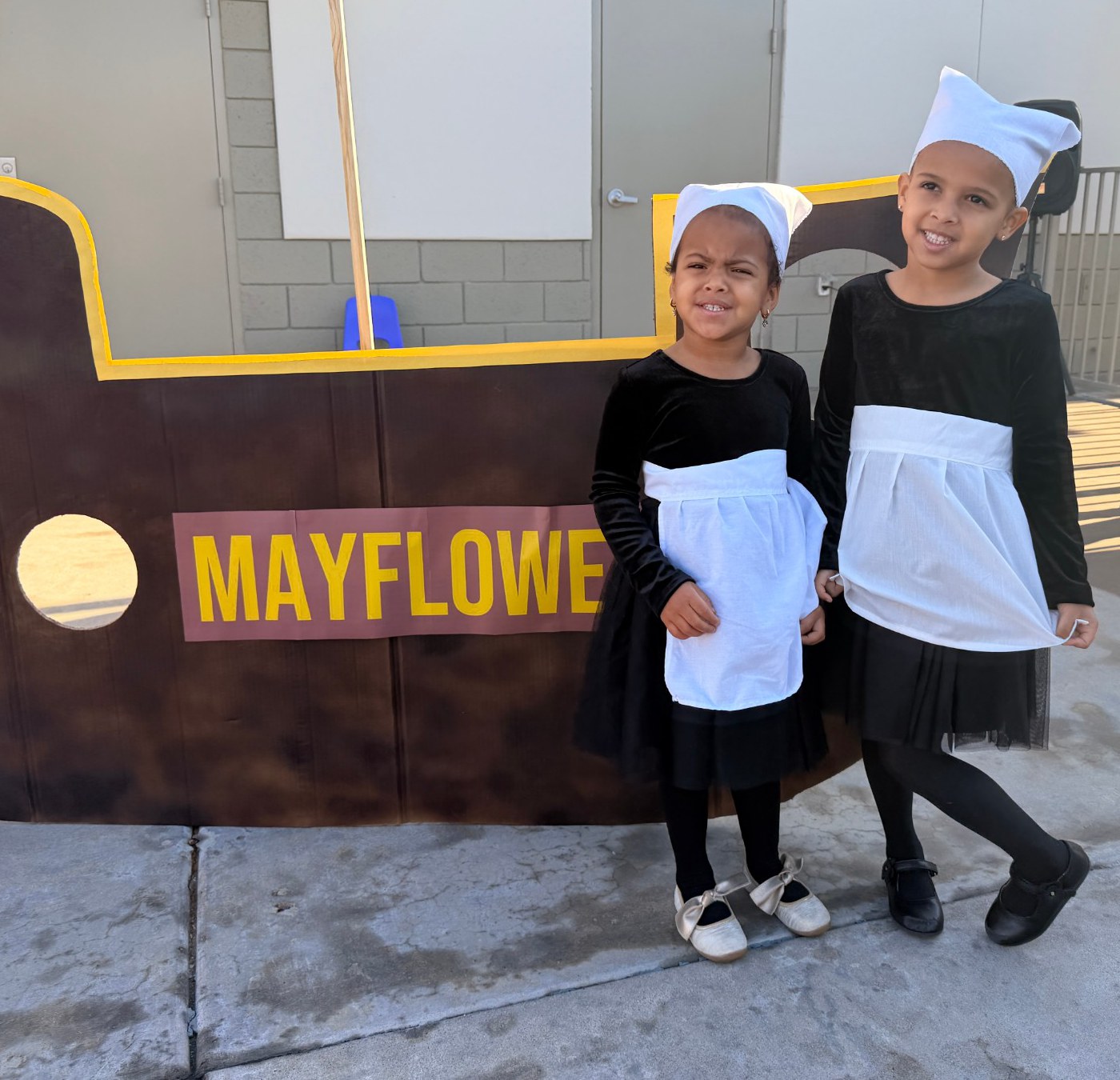
Growing up, the story of the Pilgrims and the Native Americans didn’t mean much to me. It was a school play, a construction-paper hat, a turkey traced around my hand. It was someone else’s history.
That changed when I took a DNA test and discovered that I was 13% Indigenous Taíno. That discovery sent me on a quest to learn everything I could about my Indigenous heritage. Although my Indigenous ancestors were in the Caribbean, not New England, I still felt a connection to the First Nations people of the Americas.
Years later, I began researching the ancestry of my adopted family, and I discovered that our family line goes all the way back to the original Mayflower. My ninth-great-grandfather, William Mullins, was a shoemaker from Dorking, England, who sailed on the Mayflower in 1620 and signed the Mayflower Compact. He never lived to see the harvest. He died that first brutal winter, in February 1621, along with his wife and son. Only his daughter, Priscilla, survived.
So now, when I think about the origin of Thanksgiving, I’m not thinking about someone else’s history. I’m thinking about my own. With the holiday right around the corner, here’s what I’ve learned about where Thanksgiving really comes from, and why it matters.
Two traditions of giving thanks
Long before it became an American holiday, giving thanks for the harvest was already a tradition among Native American peoples.
The Wampanoag, whose homeland the Pilgrims settled in, had been celebrating their harvests long before the Mayflower ever arrived. Many Native nations held seasonal days of thanks, like a Strawberry Thanksgiving in early summer and a Green Corn Thanksgiving when the corn ripened. For many of them, giving thanks wasn’t a once-a-year event. It was woven into daily life: thanks to the Creator, to the earth, to the animals and plants that fed them.
The Pilgrims brought their own traditions of thanksgiving, too. In England, villages celebrated the end of the harvest with a feast called Harvest Home. And the Pilgrims’ faith had its own custom: when something good happened, they set aside a special day to thank God. In 1623, for example, they declared a day of thanksgiving when a gentle rain ended a long drought.
The Europeans were the newcomers to a land where people already had rich traditions of gratitude, community, and celebration. What happened in 1621 wasn’t the invention of Thanksgiving. It was two peoples, each with their own seasonal ways of giving thanks, coming together at the same table.
What really happened at the first Thanksgiving in 1621
The only firsthand account we have is a short letter from a Pilgrim named Edward Winslow. After a brutal first year, when about half of the Mayflower passengers died, my ancestor William Mullins among them, the colonists brought in their first harvest and celebrated. The Wampanoag leader Massasoit arrived with about 90 of his men. They stayed three days, and the Wampanoag went out and brought back five deer for the feast. Plimoth Patuxet Museums notes that the gathering happened sometime between late September and early November 1621, and that nobody called it “the First Thanksgiving” until the 1800s.
Thanksgiving and Native American history: the hard part of the story
I know, as a Taíno descendant, that throughout history there were many occasions when Indigenous peoples welcomed Europeans, shared their food, their land, and their hospitality, only to have that kindness repaid with violence, displacement, and colonization.
When Columbus landed in 1492, the Taíno greeted him with gifts. In his own journal, he wrote that they would be good servants. Within a few generations, the Taíno had been enslaved and nearly wiped out.
The Wampanoag story followed a similar arc. The peace between Massasoit and the Pilgrims held for about fifty years. Then, in 1675, it collapsed into King Philip’s War, led by Massasoit’s own son, Metacom. It was one of the deadliest wars in American history, per capita, and it devastated the Native nations of New England. Since 1970, many Native people have gathered in Plymouth on Thanksgiving Day for a National Day of Mourning. I think that’s worth knowing. Gratitude doesn’t require us to look away from the truth.
Harvest festivals around the world
And the tradition of giving thanks goes back much further than either the Wampanoag or the Pilgrims.
For thousands of years, agricultural societies all around the world have celebrated the harvest. The Hebrew Bible commands a Feast of Ingathering, Sukkot, celebrated “after you have gathered in the produce.” The ancient Greeks honored Demeter, goddess of the grain. Korea still celebrates Chuseok, China the Mid-Autumn Festival, and South India Pongal.
As the days grew shorter, the temperatures dropped, and winter approached, communities would gather the fruits of their labor, prepare a feast, and share what they had with one another.
They would eat together, celebrate together, and give thanks for the abundance that would sustain them through the winter.
I think there’s something incredibly beautiful about that. Thanksgiving, in this sense, is a tradition almost as old as agriculture itself.
When did Thanksgiving become a national holiday?
Thanksgiving became a national holiday in 1863, when President Abraham Lincoln, in the middle of the Civil War, proclaimed a national day of thanksgiving for the last Thursday of November. Presidents before him, starting with George Washington in 1789, had declared days of thanksgiving, but the date wandered from year to year. In 1941, Congress fixed it as a federal holiday on the fourth Thursday of November, where it has stayed ever since.
Why is Thanksgiving celebrated on a Thursday?
The Thursday comes from New England. The 1621 feast itself wasn’t tied to any day of the week; we don’t even know its exact date. But in the decades that followed, the Puritan colonies made a habit of holding their days of thanksgiving on Thursdays.
Historians usually point to two reasons. Thursday was already “lecture day,” when ministers gave a midweek sermon and the community was used to gathering at the meetinghouse. And a Thursday kept the feast well away from the Sabbath. Sunday was reserved for worship, and Saturday was spent preparing for it.
The custom stuck. The Continental Congress chose a Thursday for its first national day of thanksgiving in 1777. George Washington chose Thursday, November 26, in 1789. And Lincoln followed suit with the last Thursday of November, the tradition we still keep today.
There’s one more twist. In 1939, November had five Thursdays, and President Franklin Roosevelt moved Thanksgiving up a week to give stores a longer Christmas shopping season. Critics called it “Franksgiving,” and for two years the country celebrated on two different days, depending on which state you lived in. In 1941, Congress settled it for good: the fourth Thursday of November.
The psychological benefits of gratitude: what the science says
The ancient traditions knew something that modern science is only now measuring: gratitude is good for us.
In one of the best-known studies, psychologists Robert Emmons and Michael McCullough asked people to write down a few things they were grateful for once a week for ten weeks. Compared with people who wrote about hassles, the gratitude group felt better about their lives, were more optimistic about the week ahead, reported fewer physical complaints, and even exercised more.
When Martin Seligman, the father of positive psychology, tested several happiness exercises, the one with the biggest immediate boost was the “gratitude visit”: writing a letter of thanks to someone who had never been properly thanked, then delivering it in person. The lift in happiness lasted about a month.
Gratitude seems to help even when life is hard. In a study of nearly 300 adults starting counseling for anxiety and depression, those who wrote gratitude letters alongside therapy reported significantly better mental health twelve weeks later than those who didn’t. Brain scans from a related group showed that, months after the letter-writing, the brain was more responsive to gratitude, as if the practice trains us to notice the good more easily.
It even reaches the body. In patients with early-stage heart failure, more grateful people slept better, felt less tired, and had lower levels of inflammation.
To be honest about the research, gratitude isn’t a cure-all. A 2020 review of 27 studies found that gratitude exercises alone have only modest effects on anxiety and depression. But modest and real, practiced every day, over a lifetime, adds up.
Why sharing a meal and giving to others make us happier
What strikes me most is that the science keeps pointing back to the same things the harvest feast was built on.
Gratitude strengthens our relationships. It draws us closer to the people we thank. People who eat with others more often report feeling happier, more trusting, and more connected to their communities. And in one study, people who were given money and told to spend it on someone else ended the day happier than people who spent it on themselves.
Give thanks. Share a meal. Share your abundance. The ancestors didn’t need a lab to know it worked.
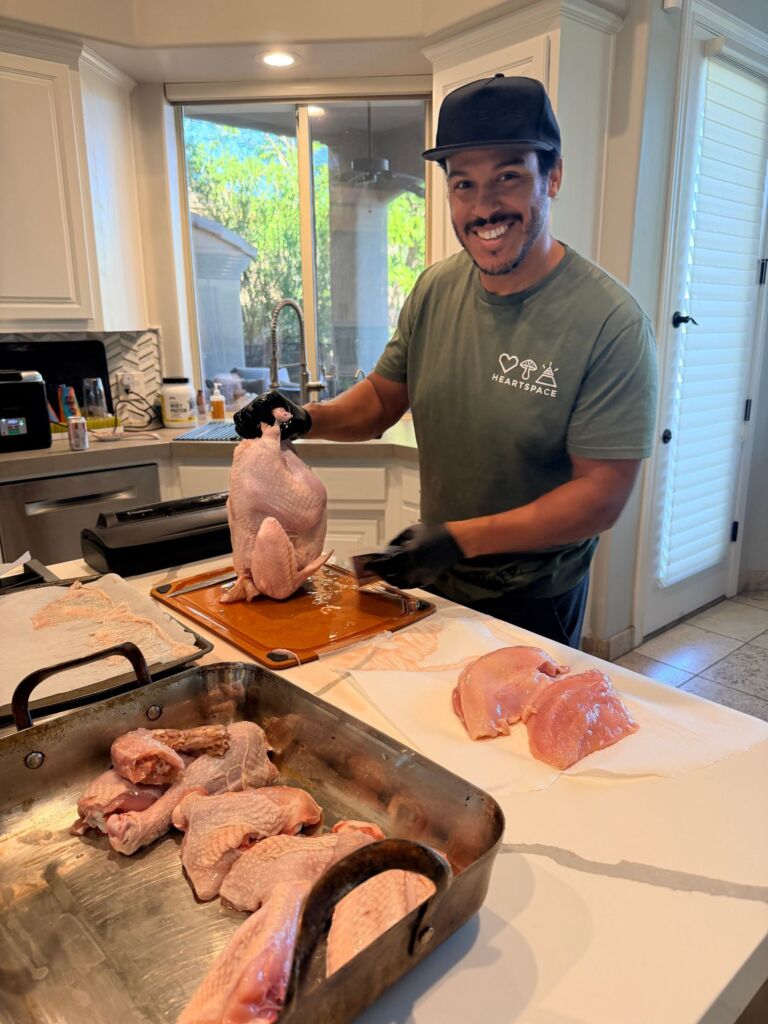
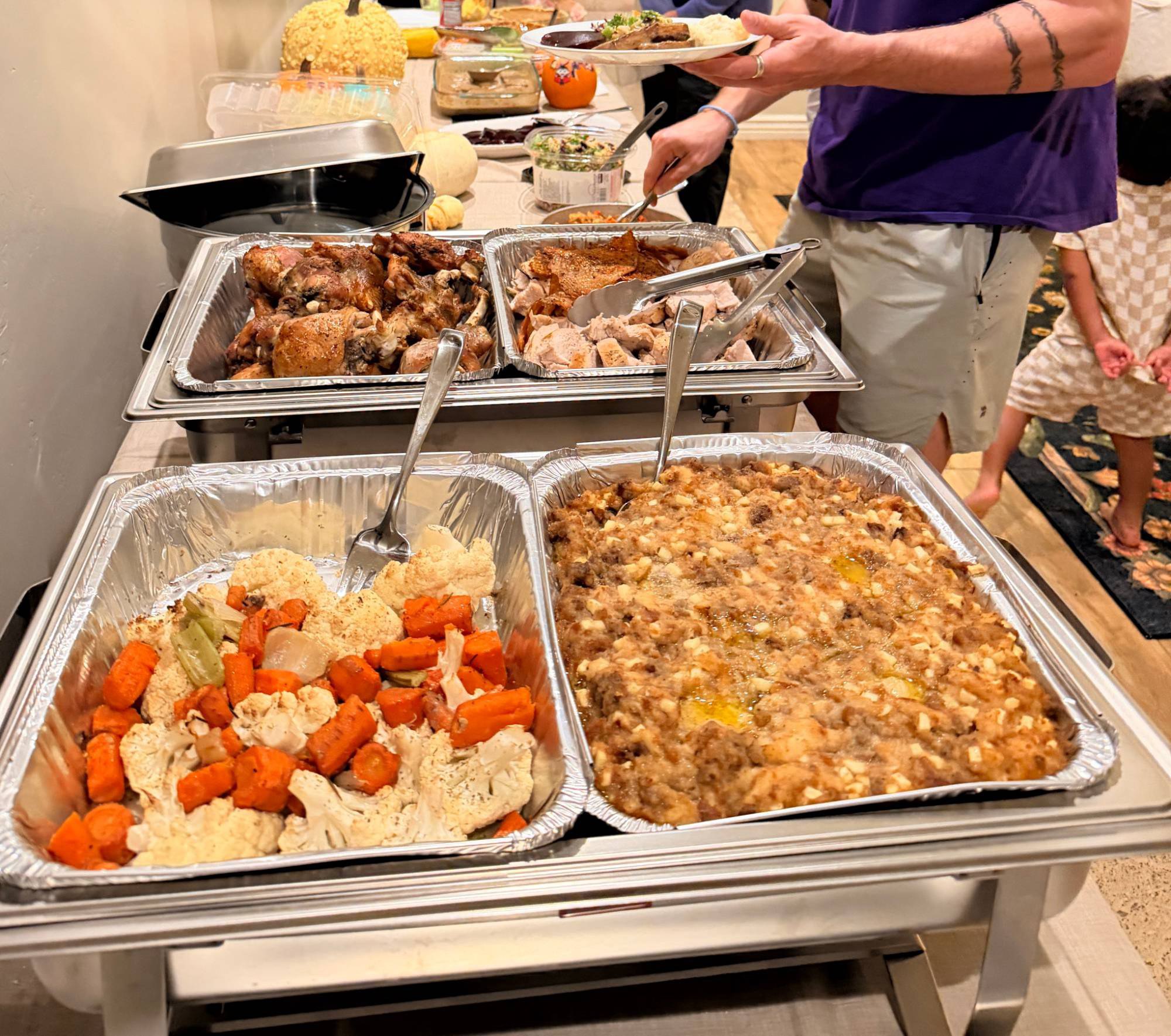
Getting the turkey ready for our family table.
What does Eucharist mean? Thanksgiving and communion
But I want to take this a little further, because there’s another ancient tradition of thanksgiving that I find just as beautiful.
In the early Christian communities, followers of Yeshua would gather together to share meals, break bread, give thanks to God, and care for one another.
In Greek, the word for giving thanks is eucharisteō. And from that word, we get Eucharist. It’s right there in the oldest account of the Last Supper: Paul writes that Yeshua took bread, “and when he had given thanks, he broke it.” (I’ve written more about how communion began as a shared meal, long before the wafer.)
Now, if you grew up Catholic or in another Christian tradition, you’ve probably heard that word before. The Eucharist is what we call Communion.
And think about that for a moment. At its heart, communion is an act of thanksgiving.
People coming together, sharing bread, sharing a meal, giving thanks to God, and recognizing their connection to one another.
The true meaning of Thanksgiving
And to me, that’s what Thanksgiving is really about.
It’s about gratitude for the gifts of this life. It’s about sharing our abundance with our neighbors. It’s about recognizing that we belong to something greater than ourselves, that we belong to one another, and that everything we have is a gift.
That’s communion.
And that’s something worth celebrating every single day.
If this story stirred something in you, I’d love to keep the conversation going. Every Sunday I send one honest letter about healing, sacred medicine, the spiritual path, and what life is teaching me along the way.
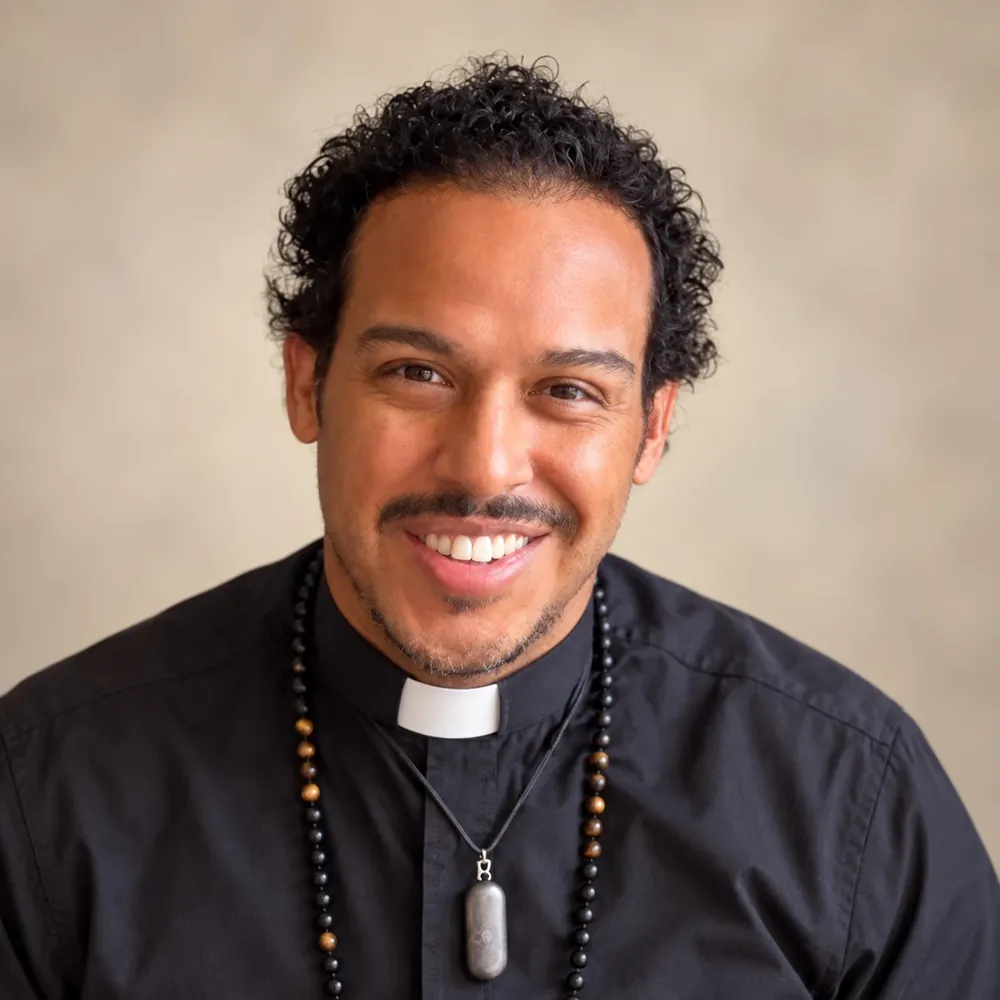
Robert Solano
I’m a psychedelic chaplain, a retired U.S. Army Lieutenant Colonel and Black Hawk pilot, and the founder of Heartspace Church. I write about healing, sacred medicine, leadership, and the spiritual path. I live with my wife, Zaira, and our three children.

KEEP READING
More Reflections
In memory of Hope Grace Rockland, The Baby Found in a Deli Garbage Can
Photo by Mike B., at pexels.com If the idea of having children while managing two careers seems overwhelming, imagine how my parents...
READ MORE →

Trusting Your Intuition: The Silent Power of Our Subconscious Mind
Analysis has limits. How I learned to trust my gut in hiring, leadership, and life, why intuition works, and how to balance it with careful decision-making.
The Medicines That Change Us
When people talk about psychedelics, they often lump together a wide range of substances—some plant-based, others synthetic. Each has its own personality, its own rhythm,...
READ MORE →
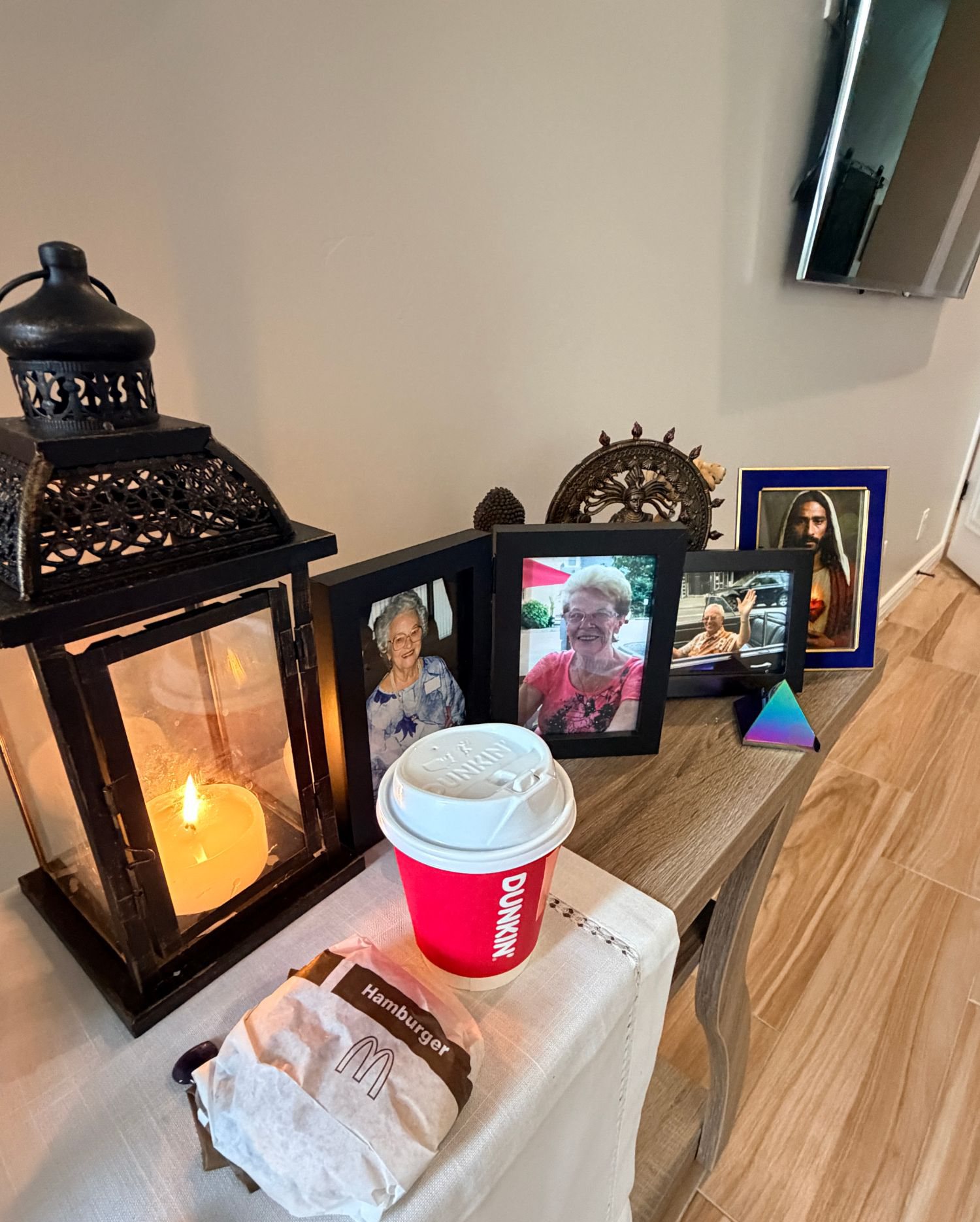
Why I Created an Altar in My Home
This Día de los Muertos, a McDonald’s hamburger and a cup of black Dunkin’ coffee sat on our altar beside my mother’s photograph. Here’s how my relationship with altars changed, from St. Jude candles to ceremony to our home.
My Top 10 Essential Leadership Books
As a leadership consultant and avid reader, I am often asked if there are any books that I recommend for aspiring leaders or seasoned...
READ MORE →
STAY CONNECTED
The Sunday Letter
Enjoyed this? Once a week I send one honest letter — a story from my life, what I’m learning about God, healing, leadership, and love, and lessons to help you show up with more love and compassion.
Free. Unsubscribe anytime.