Cohoba: Rediscovering Taíno Psychedelics and Plant Medicine
The Sunday Letter
One honest letter a week: stories, lessons, and one question to carry with you.
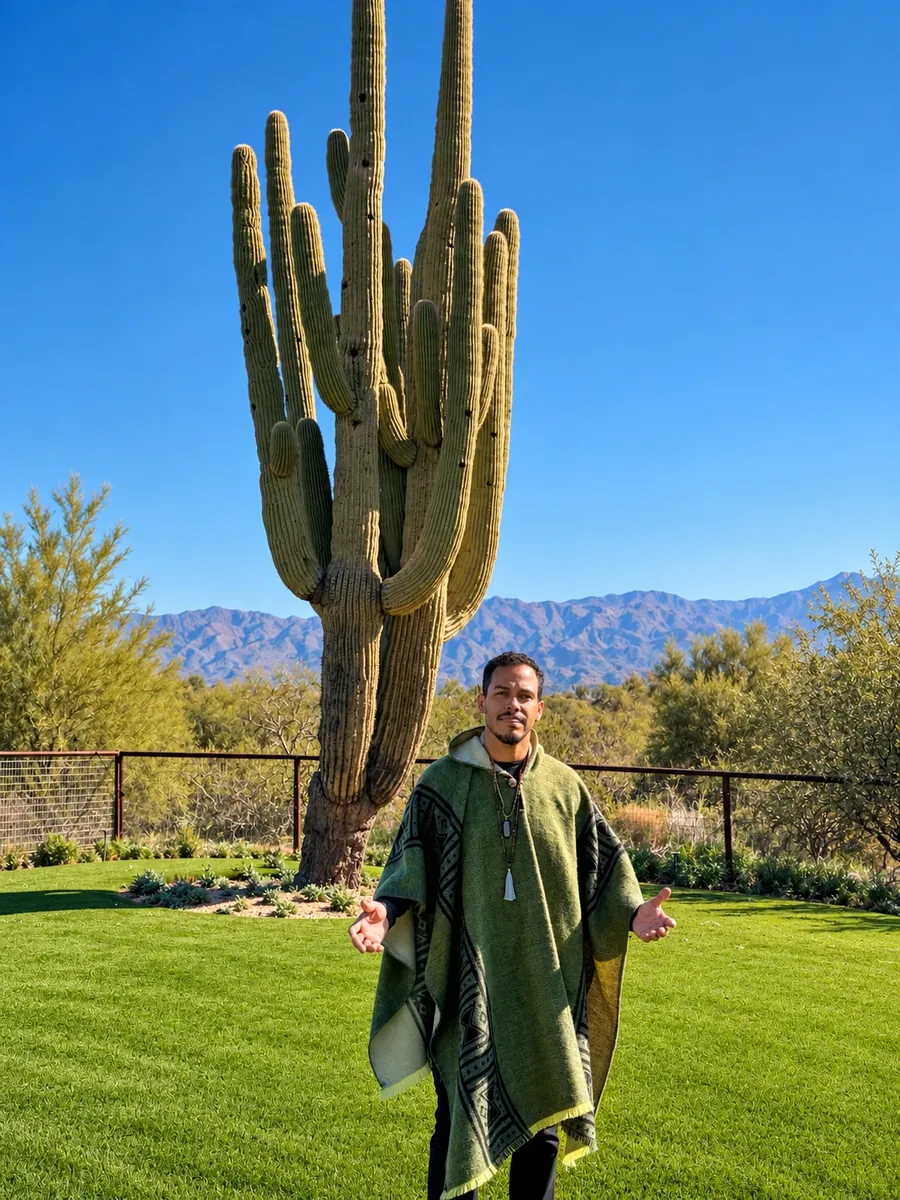
Tobacco smoke filled the air inside the maloka. I was deep in the upper Amazon rainforest, sitting with fellow veterans after another long ayahuasca ceremony, trying to make sense of everything I had experienced. Over those seven days, Mother Aya had shown me things about myself that I had struggled for years to see. Now, in the quiet that followed, the tobacco helped bring me back — back to the room, back into my body, and back to the people sitting beside me.
What made that moment so striking was that, years earlier, I had promised myself I would never smoke anything again.
For most of my adult life, I smoked recreationally. A cigarette now and then when I was out drinking. Cigars after holiday parties and get-togethers. And more of both when I was deployed in combat or carrying a lot of stress.
Then I watched my mother develop cancer after a lifetime of smoking. After dealing with health issues of my own, and after welcoming my daughter into the world, I quit for good. I understood the enjoyment and the companionship, but the damage simply wasn’t worth the reward.
So I didn’t expect what I found there in the rainforest: an entirely different relationship with the plant. In ceremony, tobacco had a place. During the most intense moments, I felt it ground me and draw me back into the here and now. Insights that had felt overwhelming became easier to sit with, to understand, and eventually to carry home.
That experience changed how I understood tobacco. It also left me curious about something much closer to home: the sacred plants of my own Taíno ancestors.
The Medicine History I Had Never Learned
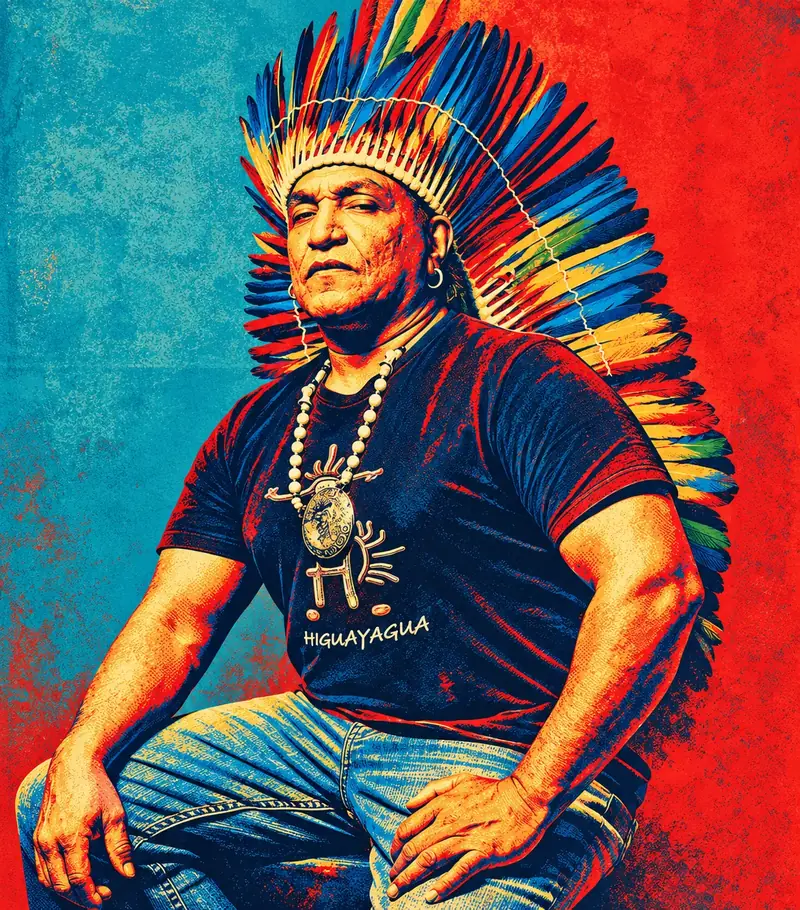
I was adopted into an Italian-Irish family in New York, with biological roots in Puerto Rico and the Dominican Republic. I knew some of my biological relatives, and I grew up around Caribbean food, music, and culture. Yet the Indigenous history beneath those traditions always felt distant. When school taught me about Columbus and the people he encountered, I rarely recognized myself in the story.
Years later, after retiring from the Army, I followed what probably sounded like a crazy idea: starting a psychedelic church. My own healing had led me toward sacred medicine, and I wanted to build a community where people could prepare for these experiences, feel supported through them, and bring what they learned back into their lives.
The more I studied, the more I noticed a gap. I kept encountering conversations about psilocybin and ayahuasca, but I rarely heard anyone talk about the visionary medicines of the Caribbean. So I was surprised, and deeply moved, to discover that my own Indigenous ancestors had traditions of working with powerful psychoactive plants, centuries before the modern psychedelic movement.
They called it cohoba.
What the Europeans Encountered
To understand how that knowledge reached us at all, we have to go back to the moment Europeans first encountered it.
When Christopher Columbus reached the Caribbean in 1492, he first landed in the Bahamas, then traveled on to Cuba and Hispaniola, the island now shared by Haiti and the Dominican Republic. Across these islands, Europeans met Indigenous societies with established spiritual traditions and a deep knowledge of plants, including tobacco.
On Hispaniola, Columbus commissioned Ramón Pané, a friar who had accompanied his second voyage, to live among Indigenous communities and record their beliefs. Pané’s account, completed around 1498, is recognized as the first book written on American soil in a European language. It preserves some of the earliest written descriptions of Taíno ceremony and healing.
I find that both remarkable and painful. Much of what we know about these traditions survives only through the writing of a missionary whose purpose included converting the very people who shared their knowledge with him. His account offers valuable glimpses, but they come to us filtered through language barriers and Christian judgments about what he witnessed.
One of those glimpses describes a healer taking a powder through the nose and entering a state in which he understood himself to be communicating with the cemís. Pané recorded the name of that powder: cohoba.
Cohoba, DMT, and the Taíno Visionary Tradition
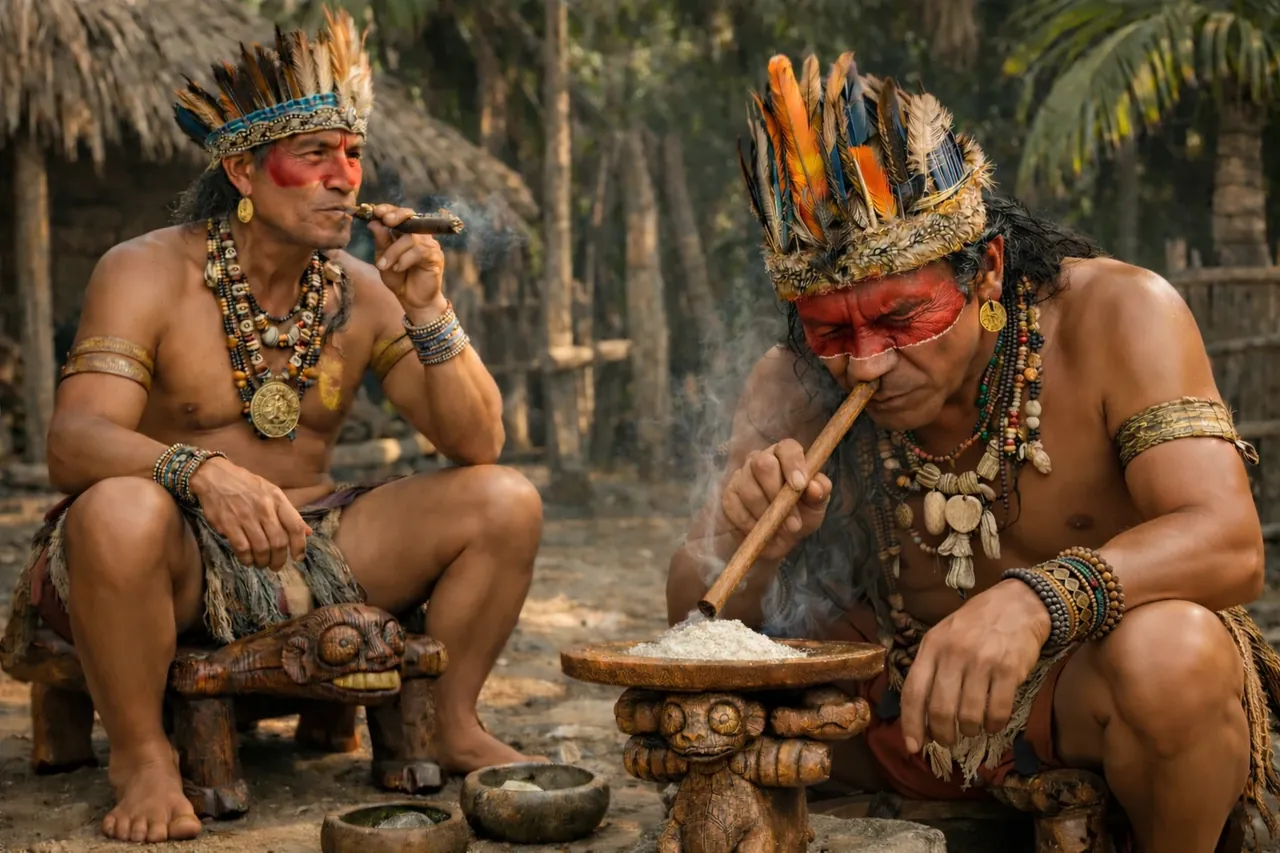
So what exactly was cohoba? The word refers to both a sacred psychoactive snuff and the ceremony associated with its use. The preparation is linked to the seeds of Anadenanthera peregrina, a tree also associated with the South American snuff known as yopo. Taíno participants inhaled the powder through snuff tubes, including distinctive Y-shaped implements that reached both nostrils.
The chemistry deserves a little care. Anadenanthera seeds are associated especially with bufotenin, also called 5-HO-DMT, while DMT and other related tryptamines have also been reported. Bufotenin and the N,N-DMT familiar from discussions of ayahuasca are distinct compounds. Calling cohoba simply “DMT” leaves out an important part of the plant’s chemistry and its particular tradition.
Just as important as the chemistry was the role cohoba played in community life. The Taíno relationship with cohoba involved healing, spiritual guidance, and shared decisions. Behiques, the healers and ritual specialists, worked with medicinal plants and sought to understand illness through ceremony. Caciques, or chiefs, also participated. Las Casas described leaders gathering to take cohoba when weighing difficult matters, including whether to go to war.
At the center of this spiritual world were the cemís, also spelled zemís: sacred powers associated with deities and ancestors, made present through objects carved from materials such as wood, stone, and shell.
Some of those objects survive, and they help make this history tangible. At the Metropolitan Museum of Art, a carved wooden cohoba stand dated to around 1000 CE has a platform above its head where the powder could be placed. Its thin body and streaming eyes have been interpreted as expressions of fasting and of the physical effects of taking cohoba. Centuries before Columbus arrived, someone carved this object, cared for it, and used it within a living spiritual practice.
When I look at objects like this, I think about how much knowledge once surrounded them. Someone knew the plants. Someone prepared the ceremony. Someone came seeking help or guidance. The surviving sculpture is one small piece of a much larger relationship between people, medicine, and the sacred.
Fasting, Coca, and Preparing for Ceremony
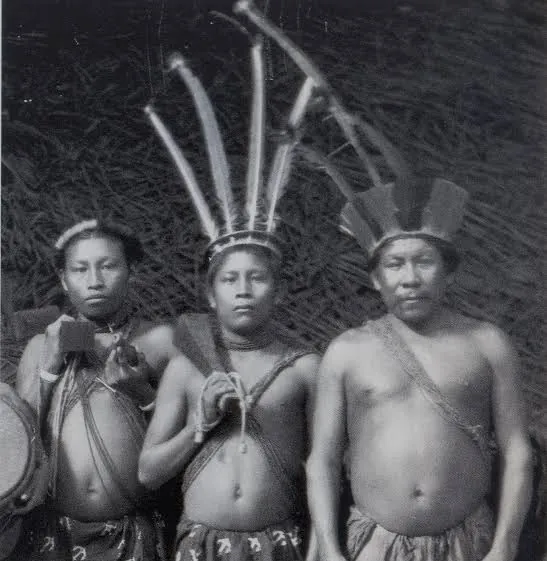
Cohoba was never something taken casually. The visionary experience belonged within a wider discipline of preparation. Early accounts describe fasting, seclusion, herbal preparations, and purification. Pané recorded a cacique withdrawing for six or seven days, consuming herbal juices during a fast undertaken to seek spiritual guidance. Las Casas described much longer periods of restricted intake, reportedly lasting months. These are colonial accounts, so their descriptions and durations deserve careful interpretation.
Coca also appears in the historical record. Las Casas connected the herbs consumed during these prolonged fasts with the coca of Peru. Modern scholarship has examined that comparison while acknowledging real uncertainty about the exact plants Pané described. Taíno use of coca can’t be confirmed. What is clear is that the first peoples of the Caribbean had a deep relationship with plants, and although much of that knowledge was lost to colonization, some of that plant wisdom is still carried forward today.
Even as a possibility, the coca connection places Caribbean medicine within a broader Latin American story. Coca has a long Indigenous history in the Andes, including Peru and Bolivia. A thousand-year-old ritual bundle found in southwestern Bolivia contained chemical evidence of coca alongside DMT, bufotenin, and other psychoactive compounds, showing that some South American practitioners worked with several powerful plants. That finding belongs to its own region and tradition, but it offers a wider context for understanding Indigenous plant knowledge.
What stays with me most is the attention given to preparation. These accounts describe people changing how they ate, withdrawing from ordinary life, and approaching the experience with purpose. Learning about that discipline deepens my appreciation for the care that should surround ceremony.
Tobacco and the Knowledge Colonization Disrupted
And then there is tobacco, which belongs in this history right alongside cohoba. Accounts from Columbus’s first voyage describe people in Cuba smoking dried leaves rolled into bundles. Europeans encountered an established practice, then carried tobacco into a global trade that profoundly changed its place in the world.
I think about that whenever I remember the maloka. The tobacco I had known at family gatherings took on a different meaning when I encountered it within ceremony. That experience made me even more curious about the spiritual and medicinal relationships my ancestors had with the plant.
My appreciation also holds the memory of my mother. Recognizing tobacco’s sacred history doesn’t erase the harm smoking can cause. Both truths belong in an honest account of my relationship with it.
Of course, so much of this knowledge didn’t simply fade away on its own. The disruption of Taíno medicine traditions was deliberate as well as devastating. Colonization brought violence, forced labor, disease, and a determined effort to replace Indigenous religion with Christianity. Missionaries treated cemís and the ceremonies surrounding them as idolatry to be eliminated. The very spiritual knowledge Europeans recorded was knowledge their colonial project sought to suppress.
That helps me understand why I grew up hearing so little about cohoba. The silence has a history. Recovering that history means reading carefully, recognizing the limits of colonial records, and listening to living Taíno people who continue the work of remembering and reconnecting.
Returning to the Fire
All of this came back to me when I began facilitating deep mystical experiences with psilocybin. One question kept returning: How do I want to honor my Indigenous ancestors?
I had found my way to sacred medicine through my own healing, and learning about cohoba gave that path a new depth. I wanted to understand the plants my ancestors knew, the ways they approached them, and the responsibilities that come with caring for others.
Someday, I hope to learn more about DMT and related visionary medicines, especially the cohoba tradition itself, through careful study and relationships with knowledgeable practitioners. My ancestry gives me a reason to listen and learn, but the practice itself requires its own knowledge, preparation, and experience.
For now, I keep returning to a quieter memory.
The day after my first journeyer’s psilocybin ceremony, we sat together around a fire, sharing a cigar as we began the work of integration. We talked about the experience and what it might mean in the days ahead. After sharing something so personal, there was a bond between us that we were only beginning to understand.
As we sat there, I thought about the tobacco in the maloka and the way it had helped me return from an overwhelming experience. I thought about my ancestors, whose relationships with plants had included healing, guidance, and communion with the sacred. Sitting beside that fire, I felt how medicine, conversation, and companionship could come together in the work of healing.
The ceremony had opened something. Now we were sitting with it, giving it words, and beginning to carry it into everyday life. As the cigar burned and the fire settled, I felt grateful to be there with him, listening.
If this story stirred something in you, I’d love to keep the conversation going. Every Sunday I send one honest letter about healing, sacred medicine, the spiritual path, and what life is teaching me along the way — plus one question to carry into your week.
Robert Solano
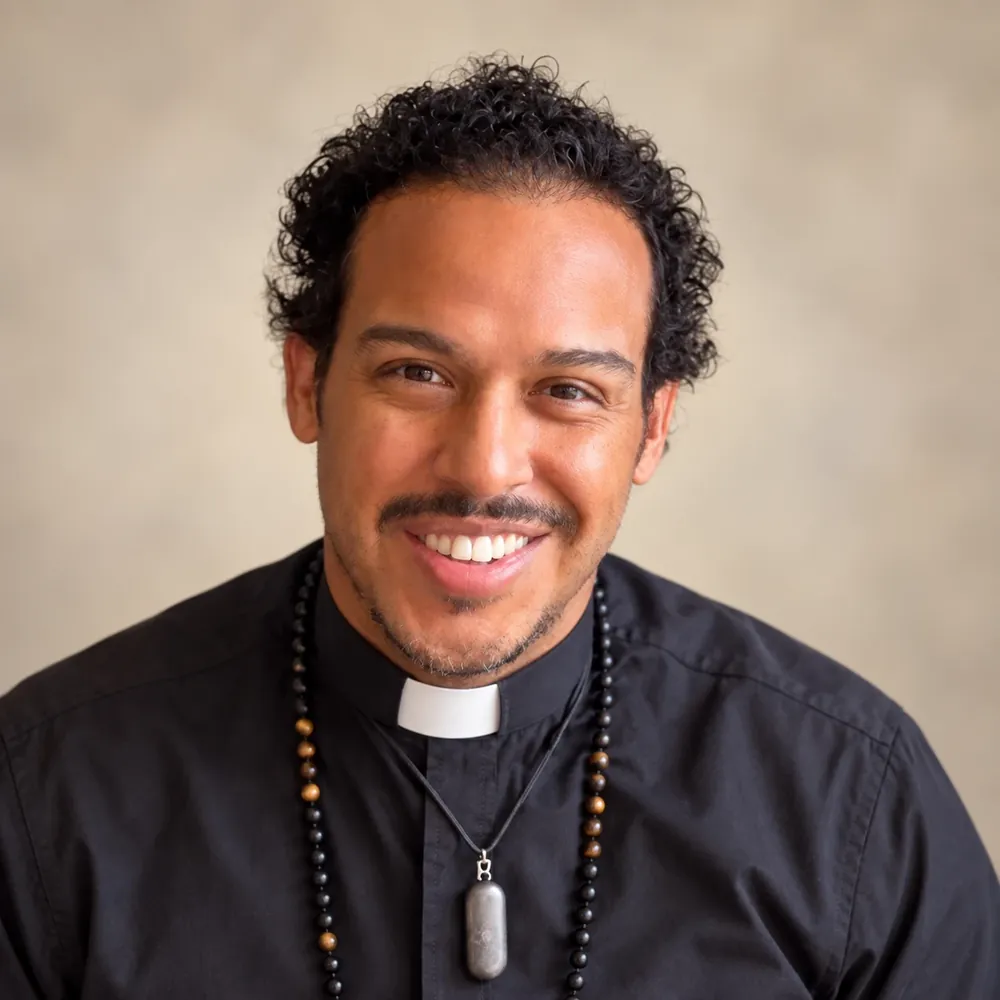
I’m a psychedelic chaplain, a retired U.S. Army Lieutenant Colonel and Black Hawk pilot, and the founder of Heartspace Church. I write about healing, sacred medicine, leadership, and the spiritual path. I live with my wife, Zaira, and our three children.
KEEP READING
More Reflections
Artists vs. Artificial Intelligence: The Debate over AI-Generated Art and Copyright Laws
The image to the left was created by artificial intelligence. It was trained using the image on the right, which is an original...
READ MORE →
Kaskading Reality
"My cousin said this is really strong," Zaira said as she unwrapped the little green gummy bear, holding it up to examine it in the...
READ MORE →
Trusting Your Intuition: The Silent Power of Our Subconscious Mind
Throughout my career and more recently as I've begun my journey as an executive leadership coach, I've had the privilege of helping countless individuals...
READ MORE →
Cohoba: Rediscovering Taíno Psychedelics and Plant Medicine
Tobacco in an Amazon maloka sent me searching for the sacred plants of my own Taíno ancestors — and led me to cohoba, the visionary sacrament the Europeans found in the Caribbean.
STAY CONNECTED
The Sunday Letter
Enjoyed this? Once a week I send one honest letter — a story from my life, what I’m learning about God, healing, leadership, and love, and one question to carry into your week.
Free. Unsubscribe anytime.