An Open Letter to a Former Associate

The Sunday Letter
One honest letter a week: stories, lessons, and one question to carry with you.
Dear Former Associate,

A few weeks ago, you gave us notice that you were leaving our law firm. You agreed to stay on a few weeks to close out some of your open cases. We are very grateful that you provided notice and that you were willing to continue to work for a few weeks. Your actions were very professional; the same level of professionalism you brought to work every day for the past two years. Thank you.
Likewise, it was very professional to inform us that you planned to start your own law firm. Regrettably, we had a conflict of interest. We terminated your employment contract early but believe that we gave you fair pay and severance. To be clear, anyone that practices or plans to practice immigration law is a business competitor. This was not personal; it is the nature of business.
In lieu of using your name, I have addressed this letter towards a friend because we do still consider you our friend. We wish you success with your law firm. We hope that you learned a lot about business while working with us and that you will develop your own unique business strategy and company procedures. This is a large market, and we have no doubt that there are many potential new clients that need your services. You are a great attorney!
Since you are our friend, I want to share some of our experiences in hopes that you will avoid the pain that we lived through. My wife, Zaira Solano, started this business with a laptop, a cell phone, and two months’ rent in her bank account—with exactly $100 to spare. I met her when she was two years into her business. For the past five years, I have been privileged to watch the business grow through its phases. I frequently help with the business on the nights and weekends after I work my normal day job.
When Zaira started Solano Law Firm, she decided that she would be a business owner. Countless attorneys practice law, and many start their own company, but few make the conscious decision to be a business owner. Being an entrepreneur requires a different mindset than being a lawyer. I’m sure you already know that running a new business is extremely difficult. The first few years were challenging for us because Zaira had to do everything, from being the sales team to the marketing specialist, receptionist, accountant, bookkeeper, human resource manager, technology officer, and networking every day, on top of her duties as an attorney. When you joined the team, we had already hired specialists for each of these activities or outsourced them. Our monthly payroll expenses are now approximately $62,000, and we spend an additional $10,000-$20,000 per month outsourcing marketing, bookkeeping, information technology, accounting, and other management tasks. Even the smallest business is a machine with many moving parts.
My recommendation to you is to hire help or outsource business management tasks as soon as possible. We should have hired and outsourced more, and sooner. I can’t begin to count how many hours I spent learning web design, pay-per-click, email marketing, IRS regulations, etc. Or how many hours I spent combing over resumes and interviewing poor job applicants. There are invariably other experts that are better at these skills than we will ever be. Because of the overwhelming workload and variety of tasks, the first few years of our business crushed our souls. It strained our relationship. We had more than one nervous breakdown and a breakup. Now we find happiness when we can focus on the few passion areas that we love—helping clients and developing our team.
I’m sure you already know that running a new business is extremely difficult. The first few years were challenging for us because Zaira had to do everything, from being the sales team to the marketing specialist, receptionist, accountant, bookkeeper, human resource manager, technology officer, and networking every day, on top of her duties as an attorney. When you joined the team, we had already hired specialists for each of these activities or outsourced them. Our monthly payroll expenses are now approximately $62,000, and we spend an additional $10,000-$20,000 per month outsourcing marketing, bookkeeping, information technology, accounting, and other management tasks. Even the smallest business is a machine with many moving parts.
My recommendation to you is to hire help or outsource business management tasks as soon as possible. We should have hired and outsourced more, and sooner. I can’t begin to count how many hours I spent learning web design, pay-per-click, email marketing, IRS regulations, etc. Or how many hours I spent combing over resumes and interviewing poor job applicants. There are invariably other experts that are better at these skills than we will ever be. Because of the overwhelming workload and variety of tasks, the first few years of our business crushed our souls. It strained our relationship. We had more than one nervous breakdown and a breakup. Now we find happiness when we can focus on the few passion areas that we love—helping clients and developing our team.
Entrepreneurship also changed our relationship. Years ago, I believed in work-life balance and enjoyed the idea of being able to leave work in the office to come home and focus on the family. For an entrepreneur and small business owner, there is no such thing as work-life balance. We are always “on.” We cannot have a conversation without talking about the business in some fashion. The business is not the only focus in our lives, but it manages to weave into every aspect of our existence. Most of our vacations are business vacations, most of our friends are business colleagues, most of our books are business books, network events are date nights, and many of our friends raise their children in their businesses. Zaira regularly works 80 hours a week and spends much more time than that talking and thinking about the business. I enjoy working hard, but Zaira is beautifully relentless.
Zaira and I had one particular date night a few years ago. We were trying to figure out how to remotely manage an office in Atlanta while living in Florida. This was a topic that we argued about multiple times. On this date night, Zaira prepared a PowerPoint presentation for me on how we could make the new business model work. Imagine! Friday night in downtown Orlando, sitting at a beautiful cafe next to Lake Eola, most couples were out getting a nice dinner while the babysitter watched their children. Lovebirds walked by, dressed up on their way to go dancing or see a play at the theater, and here Zaira and I are having a glass of wine and reviewing our business plan on an iPad. That’s romantic!
At first, I fought against this. I tried to maintain work-life balance and separate the two worlds. This put a lot of strain on our relationship. My recommendation is that you forget the myth of work-life balance. We were a lot happier when we stopped fighting our natural entrepreneurial spirits.
For entrepreneurs, there is no such thing as work-life balance. There is only life, and life includes the business, our relationships, our family, and friends. They all support each other. Now, we schedule date nights and reading time at the beach the same way we schedule conference calls and performance reviews (quarterly calendar meetings). We regularly talk about business at home at all hours of the day, night, and weekends. The business is an extension of our relationship. We love each other. We love the world. We want to develop a deep and meaningful relationship, and we want to have a meaningful impact on the world. The business is an extension of our love.
Finally, I want to share with you a valuable lesson that we learned about growth. Last year, your salary as an associate was greater than Zaira’s, the CEO. On paper, you may have seen large revenue numbers, but as I already discussed, we have huge overhead costs. Our salary costs are high, the cost of service providers is much higher than you probably expected, rent and other facilities are expensive, and there are numerous other costs associated with operating the business. Year after year, we have grown between 33% to 125% annually. We grow because we continue to invest in the business. Last year, we hired our office administrator. This was an expensive hire. It cost us over $10,000 just to find and recruit her. It cost us almost another $10,000 to train her. These costs and her entire salary came out of Zaira’s pay. For four months, Zaira did not pay herself anything to cover the initial investment in the office administrator. For four months, the work didn’t stop, but the pay sure did.
We reinvest a lot into the firm. Hiring our office administrator is one example. Other examples include the firm retreats, family days, coaching services, and marketing campaigns, to name a few. These investments are required for growth, and growth allows us to help as many clients as possible.
This year, we are in a better position. If Zaira decided to level her growth, she could pay herself over $100,000 this year. But small changes to the business could dramatically impact her salary and benefits. For example, if she decided to hire two new paralegals or if there was a 30% dip in new clients, Zaira’s salary would reduce to near minimum wage. Imagine working 80+ hours a week as an attorney and CEO to make minimum wage!
The truth that few people talk about is that small business growth is cyclic. You will have hard times and good times. You will have some months where you will make more money than you ever dreamed possible, and other months when you will question your life choices as you cry yourself to sleep.
My recommendation is to expect it, prepare for it, and don’t be surprised when the world appears to be crashing down on you. We fall so that we can learn to pick ourselves back up. This is a hard lesson, but one of the most important. It is why most solo-practitioners give up after six months and either apply to work for a larger law firm or try to teach at a university instead.
In conclusion, we really do wish you the best of luck as you start your own business. We have no ill-will towards you as long as you have no ill-will towards us. We have an abundance mindset and welcome anyone that is compassionate, professional, and eager to serve the immigrant community. They are severely underserviced and need our help.
My wife is the CEO, not me, but I am sure that she will agree that being an entrepreneur is the most difficult thing she has ever done in her life, but also the most rewarding—cliché, I know. Although Zaira and I are not parents, I believe that some mothers will even tell you that being an entrepreneur is more difficult than raising a child.
We wish you the best of luck and look forward to seeing your business grow and develop.
Saludos,
Robert Solano
Chief Advisor
Solano Immigration Law Firm


¿Son los taínos nativos americanos? Recordando a los pueblos indígenas del Caribe
Cuando era niño en Nueva York, octubre y noviembre siempre eran meses para celebrar a los nativos americanos y su papel en la fundación de Estados Unidos. En la escuela primaria cantábamos canciones sobre cómo Cristóbal Colón “navegó el océano azul”. Aprendimos que conoció a los nativos americanos en el Caribe y que los llamó “indios” porque creyó que había llegado a la India. Aprendimos cómo los nativos americanos ayudaron a los primeros colonos, y terminábamos la temporada disfrazándonos de peregrinos y de indígenas para el Día de Acción de Gracias.
Soy latino, dominicano y puertorriqueño para ser más exacto, y la mayoría de mis amigos eran latinos, negros o blancos. Sabía que todavía existían grupos de nativos americanos en Estados Unidos, como los navajos, los cheroquis o los inuit, pero no conocía a ningún nativo americano en persona. Los nativos americanos eran algo de los libros de historia. Mucho menos me consideraba nativo americano. Ahora me pregunto si estaba equivocado.
El tema de la raza y la etnicidad era muy confuso para mí de niño. Como muchos latinos de mi generación, no distinguíamos entre raza y etnicidad. La gente era blanca, negra o latina. Si alguien me preguntaba qué era, respondía: “Soy latino” o “Soy hispano”. No era raro que mis amigos o mi familia dijeran: “No soy negro, soy dominicano” o “No soy blanco, soy puertorriqueño”.
Los latinos podían ser de piel clara, pelirrojos y de ojos azules, o de piel color chocolate y pelo bien rizado.
Es bien sabido que casi todos los latinos de las islas del Caribe somos una mezcla de europeo y africano. Esto se debe a que en el Caribe, mucho más que en el territorio continental de Estados Unidos, los colonizadores europeos tuvieron hijos con sus esclavas y sirvientas africanas. Muchas islas del Caribe también dependían de negros libres y mulatos (personas de raza mixta) para administrar las plantaciones. Esto dio lugar a una clase intermedia de raza mixta en el Caribe, que no existía en el territorio continental.
Esa mezcla de razas es la razón por la que a los latinos caribeños nos cuesta entender las categorías raciales de Estados Unidos. Casi todos los latinos caribeños somos de raza mixta, y clasificarnos como blancos o negros depende en gran parte del color de la piel, que es una característica bastante superficial. En muchas familias latinas, el color de la piel puede variar mucho entre parientes o entre hermanos. Hasta con las estaciones cambia mi color: en invierno parezco más un español bronceado y en verano parezco más negro.
Para complicar aún más el tema racial, pruebas de ADN recientes han revelado que muchos latinos caribeños también tienen ascendencia taína.
¿Quiénes eran los taínos?
Los taínos eran una rama del pueblo arahuaco. Eran el pueblo indígena de las islas del Caribe, también llamadas las Antillas, que incluyen La Española (República Dominicana y Haití), Puerto Rico, Cuba, Jamaica, Trinidad y Tobago, las Islas Caimán, las Bahamas y muchas otras.
¿Qué les pasó a los taínos?
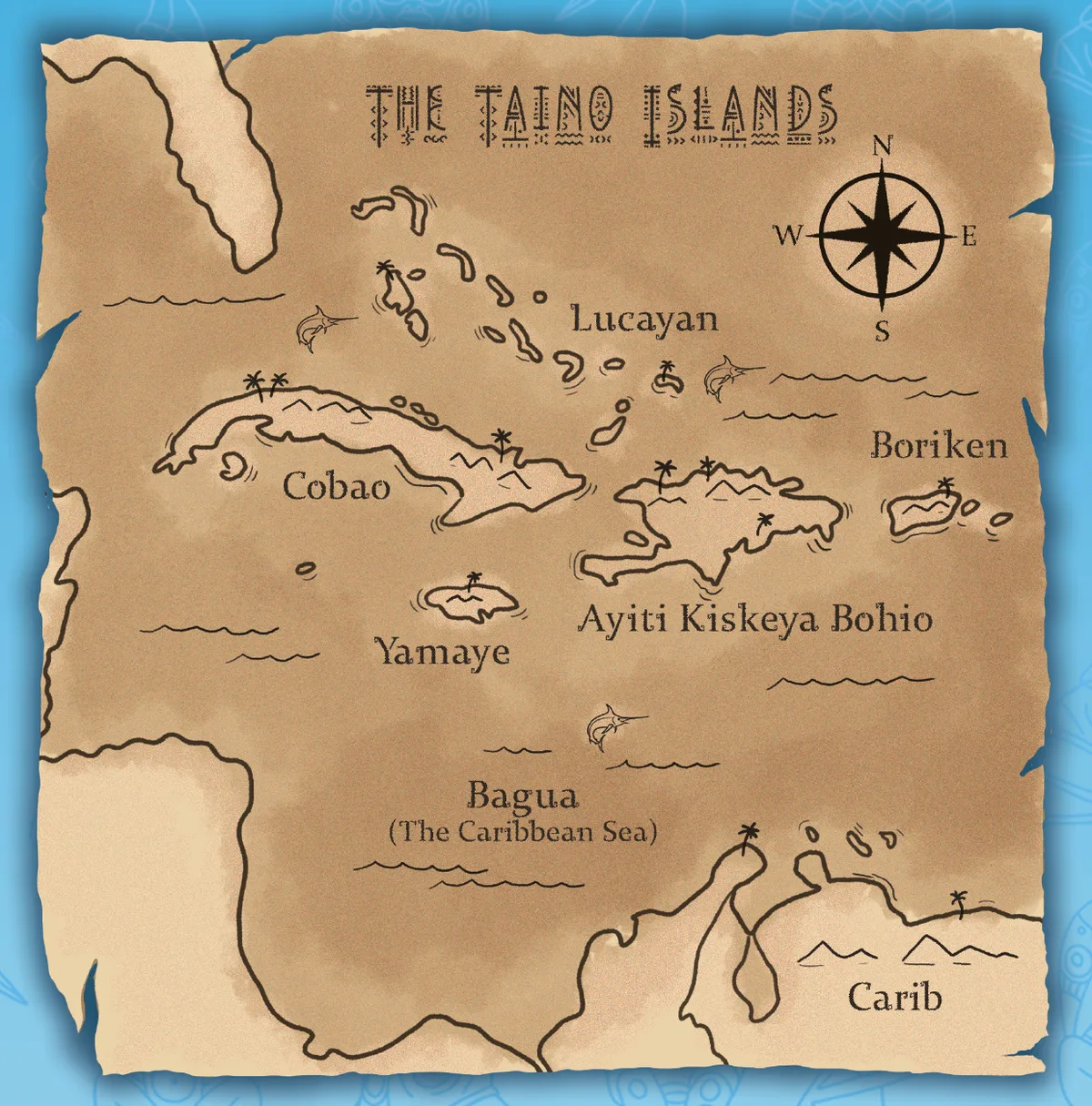
Los taínos fueron el primer pueblo indígena que Cristóbal Colón conoció en el Nuevo Mundo. Fueron las personas a quienes Colón llamó “indios” por error, y en su diario escribió sobre ellos: “Eran todos muy bien hechos, de muy hermosos cuerpos y muy buenas caras… Ellos deben ser buenos servidores”.
Más tarde, Colón y sus hombres enviaron a 500 taínos a España para venderlos como esclavos; 200 murieron en el viaje. Cuando regresó a la isla unos años después, ordenó que cada taíno le trajera oro, y a quienes no lo hicieron les cortaron las manos. En las décadas siguientes, el pueblo taíno fue devastado por las enfermedades, la esclavitud y el genocidio.
Siempre pensé que los pueblos indígenas de las islas del Caribe se habían extinguido. Ni siquiera escuché la palabra “taíno” hasta que fui adulto. A principios de los años 2000 me enteré del movimiento para cambiar el Día de Colón por el Día de los Pueblos Indígenas. Eso me inspiró a aprender más sobre los pueblos indígenas de la República Dominicana y Puerto Rico. Para mi sorpresa, descubrí que se calcula que había unos 3 millones de taínos en el Caribe antes de la llegada de Colón. Su idioma nos dio palabras como canoa, hamaca, barbacoa, tabaco y huracán. Eran un pueblo pacífico y generoso, lo que lamentablemente permitió que Colón y otros colonizadores los explotaran.
¿Soy taíno? Lo que reveló mi ADN
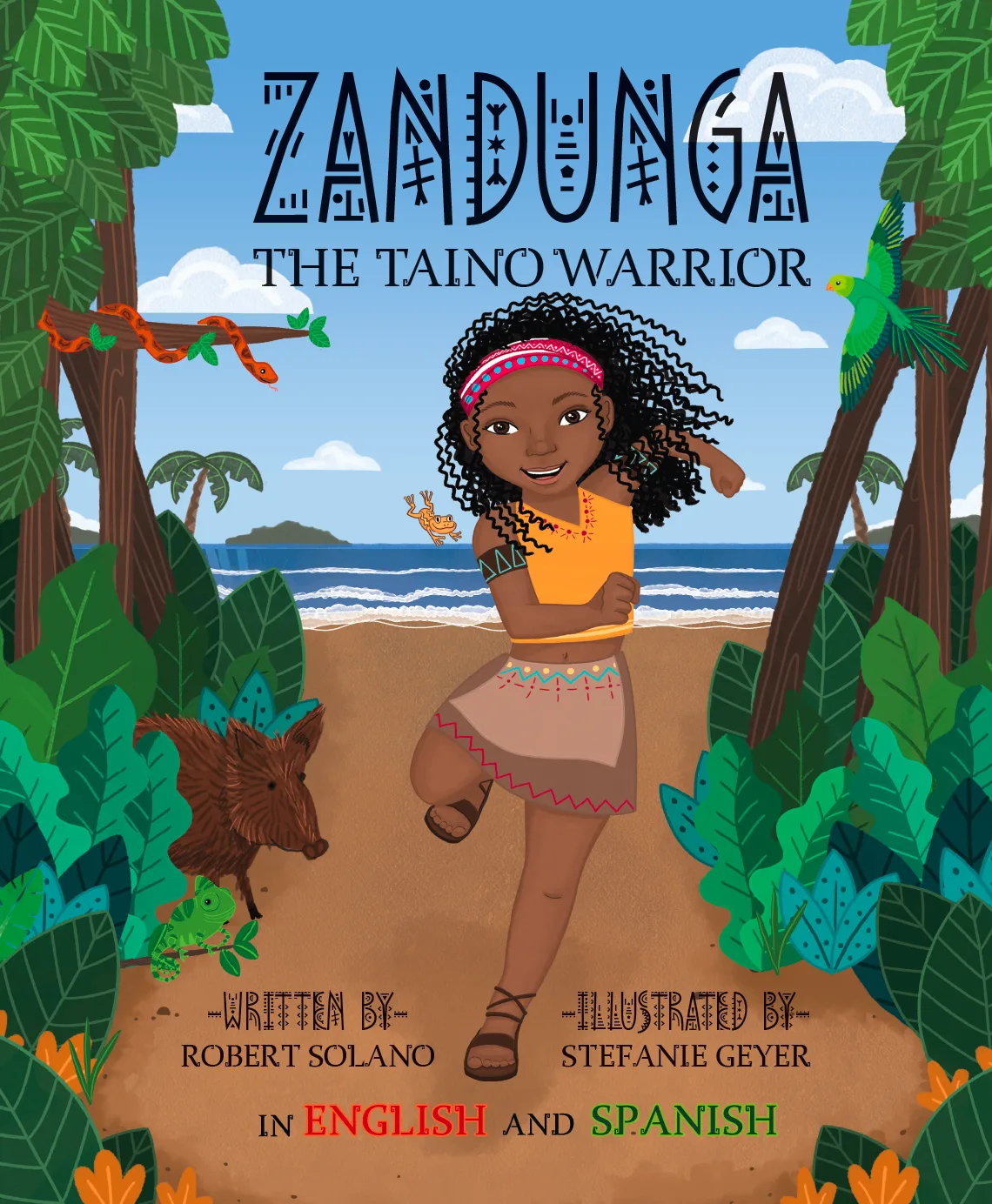
Cuando nació mi hija, escribí un libro infantil bilingüe para enseñarle sobre el pueblo taíno. El libro se llama “Zandunga: The Taíno Warrior” y muestra distintos aspectos de la cultura, la vida y las tradiciones taínas antes de la colonización.
Aprendí mucho sobre el pueblo taíno mientras escribía el libro, pero al terminarlo me quedó una pregunta rondando: “¿Seré yo taíno?”
Mientras investigaba para el libro, descubrí que algunos caribeños todavía tenían ascendencia taína, pero nadie en mi familia podía rastrear nuestra historia tan atrás. Así que me hice una prueba de ADN, y los resultados me sorprendieron. Esperaba tener un 1 % o 2 % de ADN taíno. Para mi sorpresa, mi ADN era 13 % taíno, más o menos una octava parte (también era 50 % español de Andalucía y 30 % de África Occidental, sobre todo de Senegal, Guinea y Nigeria).
¡Era taíno!
Seguí investigando y descubrí que quizás no soy el único. Durante la mayor parte de la historia moderna se pensó que los taínos estaban extintos, pero estudios recientes han demostrado que eso podría no ser cierto.
Aunque los registros coloniales declararon extintos a los taínos, estudios genómicos han demostrado que hasta el 61 % de los puertorriqueños, el 30 % de los dominicanos y el 33 % de los cubanos tienen ADN taíno. En todo el mundo, los latinos de estos tres países suman unos 33 millones (9 millones de puertorriqueños, 11 millones de dominicanos y 13 millones de cubanos).
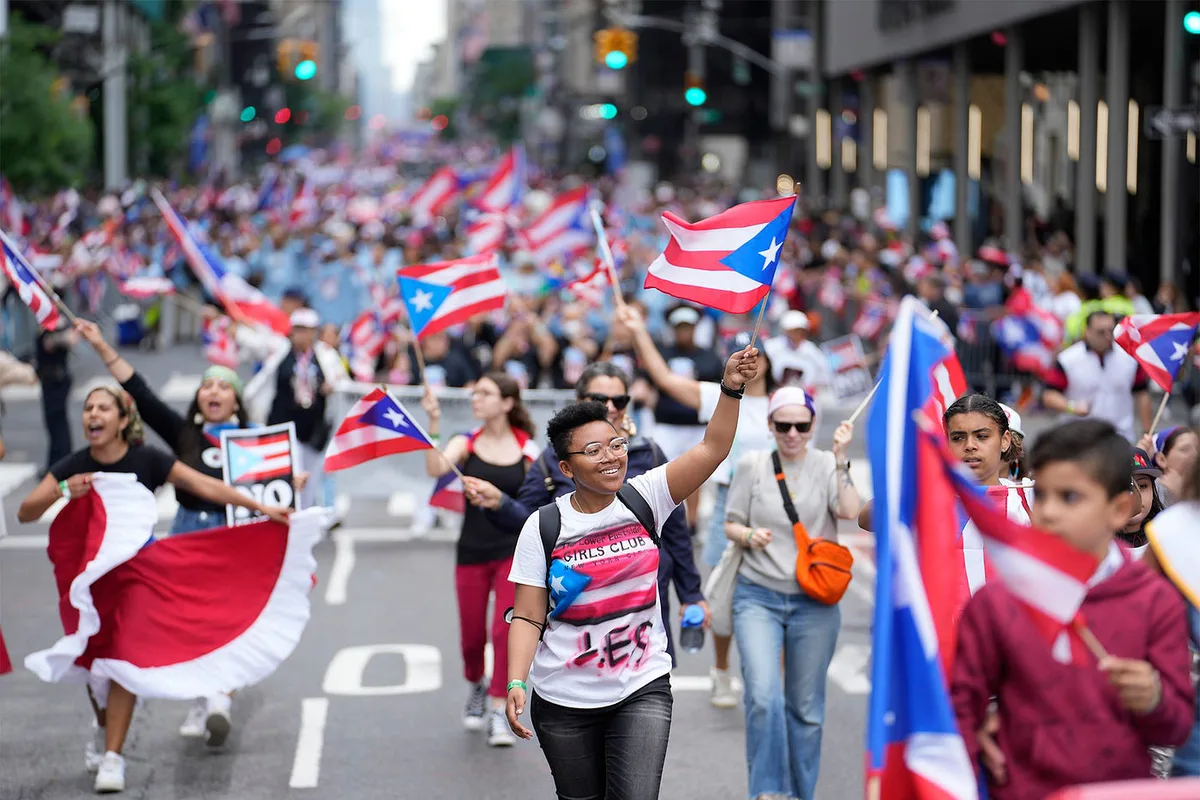
Si los estudios de ADN son correctos, podría haber más de 13 millones de descendientes de taínos en el mundo, y muchos más si se cuentan las demás islas de las Antillas. Los taínos no solo no están extintos, sino que podrían ser uno de los grupos más grandes de descendientes indígenas fuera de Centroamérica y Sudamérica.
¿Por qué se olvida a los taínos en la historia de los nativos americanos?
Eso me llevó a otra pregunta: “¿Por qué no celebramos a los taínos cuando celebramos la historia de los nativos americanos?”
Por ejemplo, hace poco visité el Museo Heard en Phoenix, uno de los museos de arte e historia nativa americana más importantes del país. No encontré ni una sola referencia al pueblo taíno. Del mismo modo, sería difícil encontrar una exhibición taína en la mayoría de los festivales nativos americanos del país. Es como si se hubieran olvidado de los taínos.
Traté de entender por qué se olvidaba a los taínos en la historia de los nativos americanos, pero me di cuenta de que ni siquiera estaba seguro de si los taínos eran nativos americanos.
Le pregunté a una amiga dominicana: “¿Los taínos son nativos americanos?”
Lo pensó unos minutos y respondió: “Supongo que depende de lo que consideres nativo americano. Sí, son indígenas, pero no son nativos americanos como los ‘nativos americanos’ de Estados Unidos”.
“¿Y Puerto Rico?”, le contesté. “Eso es parte de Estados Unidos”.
“Supongo que sí es parte de Estados Unidos”, dijo, desconcertada. “No estoy segura”.
Yo tampoco estaba seguro.
Entonces, ¿son los taínos nativos americanos?
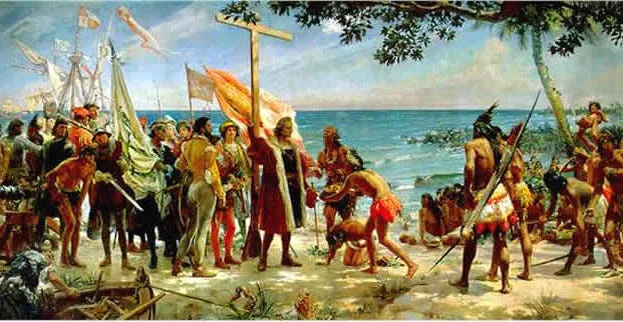
Claro que los taínos eran un pueblo indígena, pero no tenía claro si el término nativo americano se refiere solo a los pueblos indígenas de los 50 estados de Estados Unidos, o a los pueblos indígenas de toda América del Norte, Central y del Sur, y del Caribe.
Resulta que no existe una definición clara de lo que significa nativo americano. Algunas organizaciones definen a los nativos americanos como los pueblos indígenas de Estados Unidos (sin incluir sus territorios); otras amplían la definición para incluir a Estados Unidos y sus territorios (incluidos Puerto Rico y Guam); y otras consideran nativo americano a cualquier pueblo indígena del hemisferio occidental. Si definimos a los nativos americanos como los pueblos indígenas de los 50 estados únicamente, los taínos no serían nativos americanos. Pero si incluimos los territorios de Estados Unidos o las Américas en general, los taínos sí serían nativos americanos.
Aunque no hay una definición universal de nativo americano, deberíamos incluir a los taínos como nativos americanos por dos razones importantes.
La primera razón para incluir a los taínos en la historia de los nativos americanos es que los términos “nativo americano” e “indio americano” se han usado históricamente como sinónimos. Recordemos que los taínos fueron el primer pueblo indígena al que se llamó “indios”. Tuvieron un papel decisivo, aunque trágico, en la llegada de Cristóbal Colón y en los inicios de la historia del Nuevo Mundo. No deberíamos excluir a este importante pueblo indígena al recordar la historia de los nativos americanos.
La segunda razón para celebrar la herencia taína es que los descendientes de los taínos son parte fundamental de Estados Unidos. No solo Puerto Rico (uno de los hogares ancestrales de los taínos) es un estado libre asociado de Estados Unidos, sino que los descendientes de taínos también son una gran parte de la ciudadanía estadounidense. Si los estudios de ADN son correctos, podría haber más de 4 millones de latinos con ascendencia taína viviendo en Estados Unidos. Cuando Estados Unidos celebra el Día de los Pueblos Indígenas en octubre y el Mes de la Herencia Nativa Americana cada noviembre, también deberíamos celebrar la herencia taína.
La herencia taína es herencia americana.
Al final, el diccionario Merriam-Webster define a un nativo americano como “un miembro de cualquiera de los pueblos indígenas del hemisferio occidental, especialmente un nativo americano de América del Norte y en especial de Estados Unidos”.
Según esta definición, y por las razones que ya expliqué, los taínos son nativos americanos. El Caribe es parte de América del Norte y Puerto Rico es parte de Estados Unidos.
La definición de nativo americano puede ser confusa, y esa es una de las razones por las que a menudo se olvida a los taínos en las celebraciones nativas americanas. Otra razón es que gran parte de nuestra cultura, idioma y herencia se perdió. Aunque existen algunas palabras, artefactos y viejos estudios antropológicos, sabemos muy poco sobre el pueblo taíno. Aunque hay millones de descendientes de taínos, nuestra cultura fue casi borrada por los colonizadores y los misioneros. En cambio, pueblos como los navajos, los hopis y los cheroquis todavía practican rituales tribales que se han transmitido de generación en generación.
El renacer taíno hoy
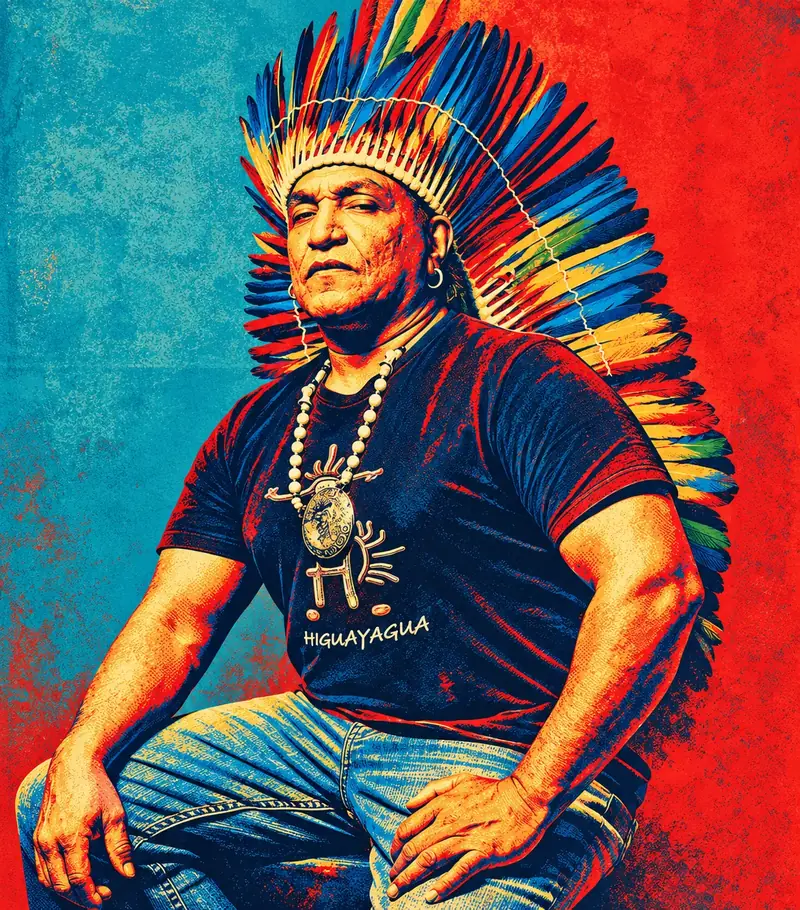
Por suerte, hay nuevos esfuerzos para recuperar la cultura y la herencia taínas. Distintos grupos, creadores de contenido y autores están tratando de reconstruir el idioma taíno, la cultura y las costumbres a partir de artefactos históricos y crónicas antiguas. Gracias a internet, estamos viviendo las primeras etapas de un renacer de la cultura taína. Líderes como Jorge Baracutei Estévez, que aparece al inicio de este artículo, y grupos comunitarios taínos de toda la diáspora están llevando ese trabajo adelante.
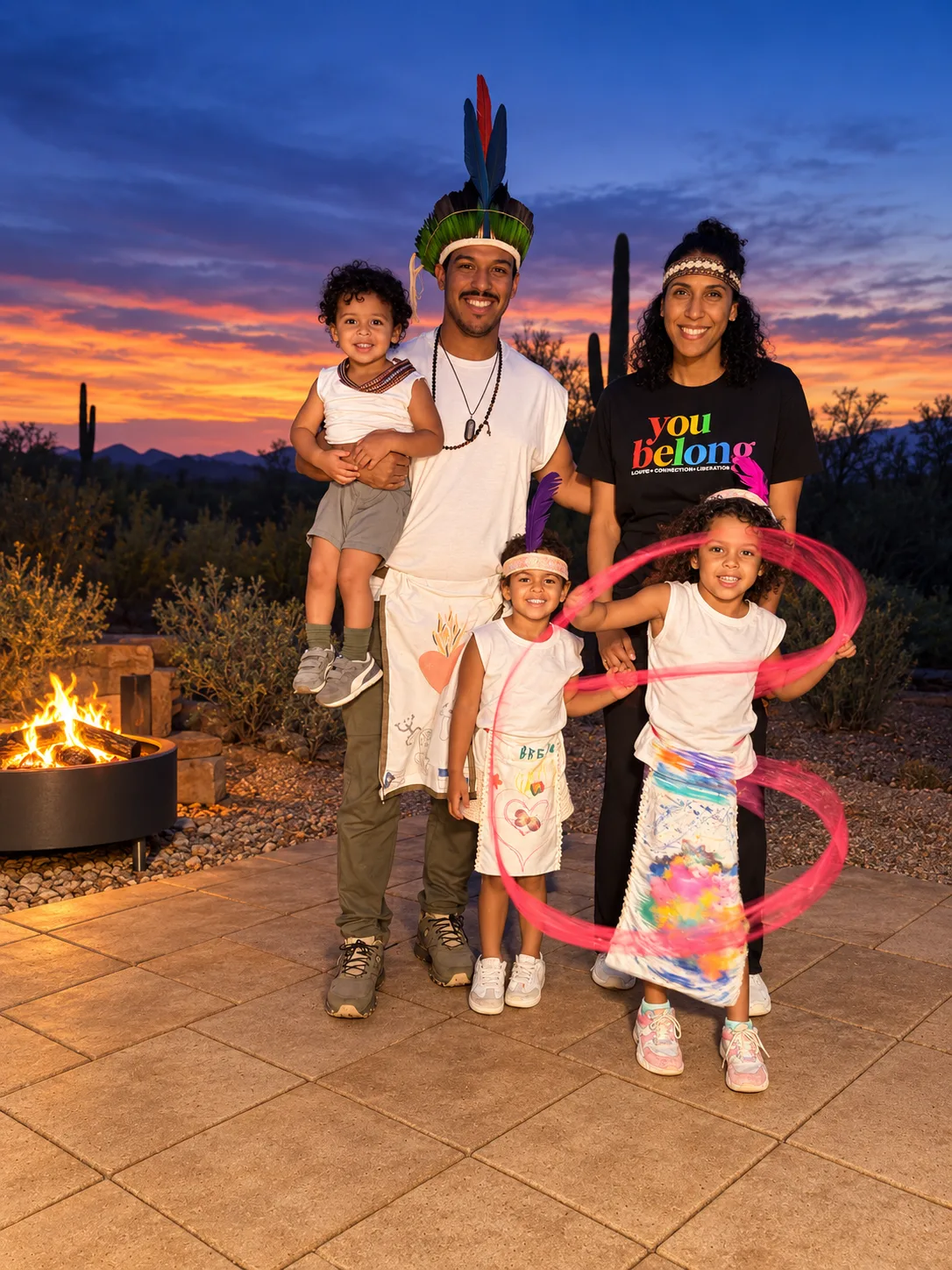
Para mi familia, este renacer es algo personal. Para celebrar el Día de los Pueblos Indígenas, hicimos un viaje de campamento improvisado a las Superstition Mountains. Siguiendo la tradición de nuestros ancestros taínos, los niños y yo hicimos naguas (taparrabos y faldas) y cachuchas (tocados de plumas), y cada una de las niñas recibió su primera pluma por hacer su nagua. Esa noche nos unimos a la reunión virtual de la tribu taína Higuayagua y escuchamos a nuestros caciques y ancianos compartir historias, oraciones y cantos taínos.
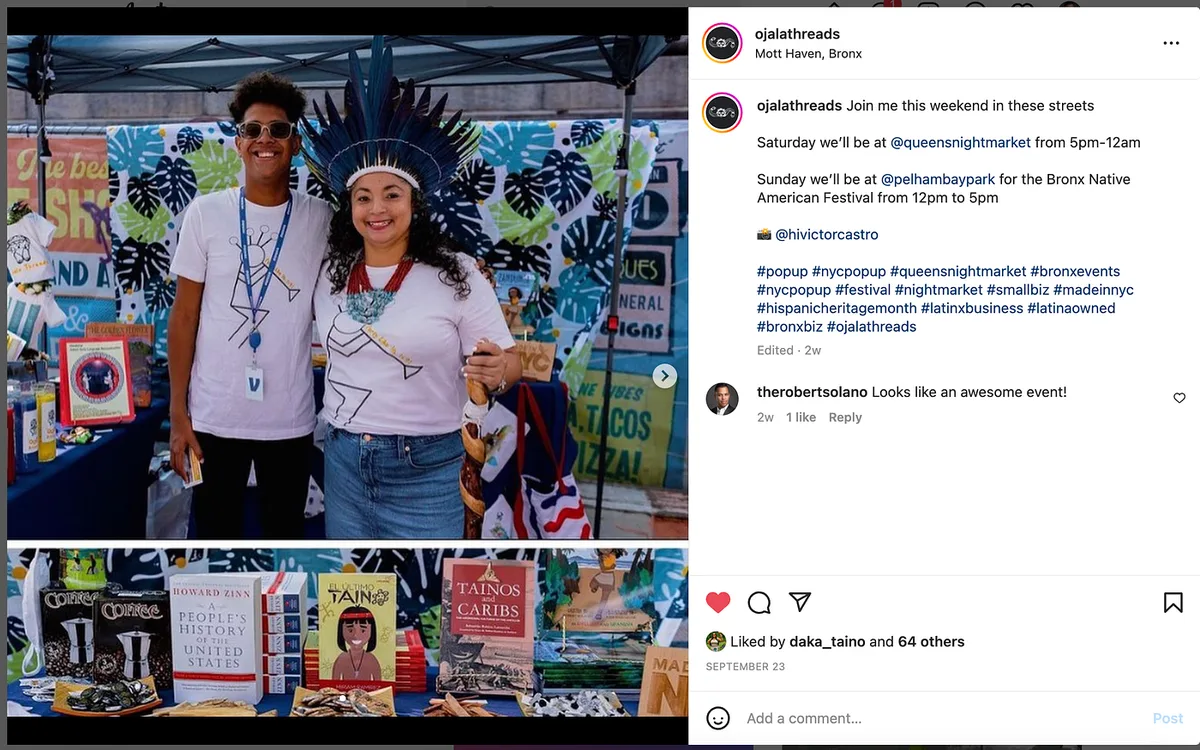
Otra razón por la que históricamente no se ha celebrado a los taínos junto con la herencia nativa americana es que la mayoría de los latinos caribeños y de los antillanos no conocen su propia ascendencia. Como a mí, a la mayoría nos enseñaron que los taínos se habían extinguido. Solo recientemente, en las últimas dos décadas, las pruebas de ADN nos han permitido saber que la genealogía taína está mucho más extendida de lo que creían muchos historiadores y antropólogos. A medida que más personas exploran su ADN con servicios como 23andMe o Ancestry.com, sospecho que cada vez más latinos y antillanos se interesarán por su ascendencia taína.
Los taínos tuvieron un papel importante en la historia de América. Fueron el primer pueblo indígena que encontró Cristóbal Colón y fueron decisivos en la fundación del Nuevo Mundo. Aunque gran parte de nuestra cultura ancestral se perdió, nuestra sangre sigue viva, y la cultura misma está regresando. Hoy, los descendientes de los taínos son una gran parte de la población de Estados Unidos y del mundo. Un gran porcentaje de dominicanos, puertorriqueños, cubanos, haitianos, jamaicanos y otros antillanos tiene algo de ADN taíno. Su legado sigue vivo, y cuando celebramos la herencia nativa americana, también deberíamos celebrar al increíble pueblo taíno.
La historia taína también tiene un lado espiritual. Mi artículo complementario profundiza en él: Cohoba: Rediscovering Taíno Psychedelics and Plant Medicine (en inglés), la historia de cómo salí a buscar las plantas sagradas de nuestros ancestros taínos.
Escribí Zandunga: The Taíno Warrior para que mis hijos crecieran conociendo a nuestros ancestros taínos. Es un libro ilustrado bilingüe, en inglés y español, y está disponible en Amazon.
Este artículo es la versión en español de Are Taínos Native American?, publicado originalmente en inglés en febrero de 2023. Read it in English.
If this story stirred something in you, I’d love to keep the conversation going. Every Sunday I send one honest letter about healing, sacred medicine, the spiritual path, and what life is teaching me along the way — plus one question to carry into your week.
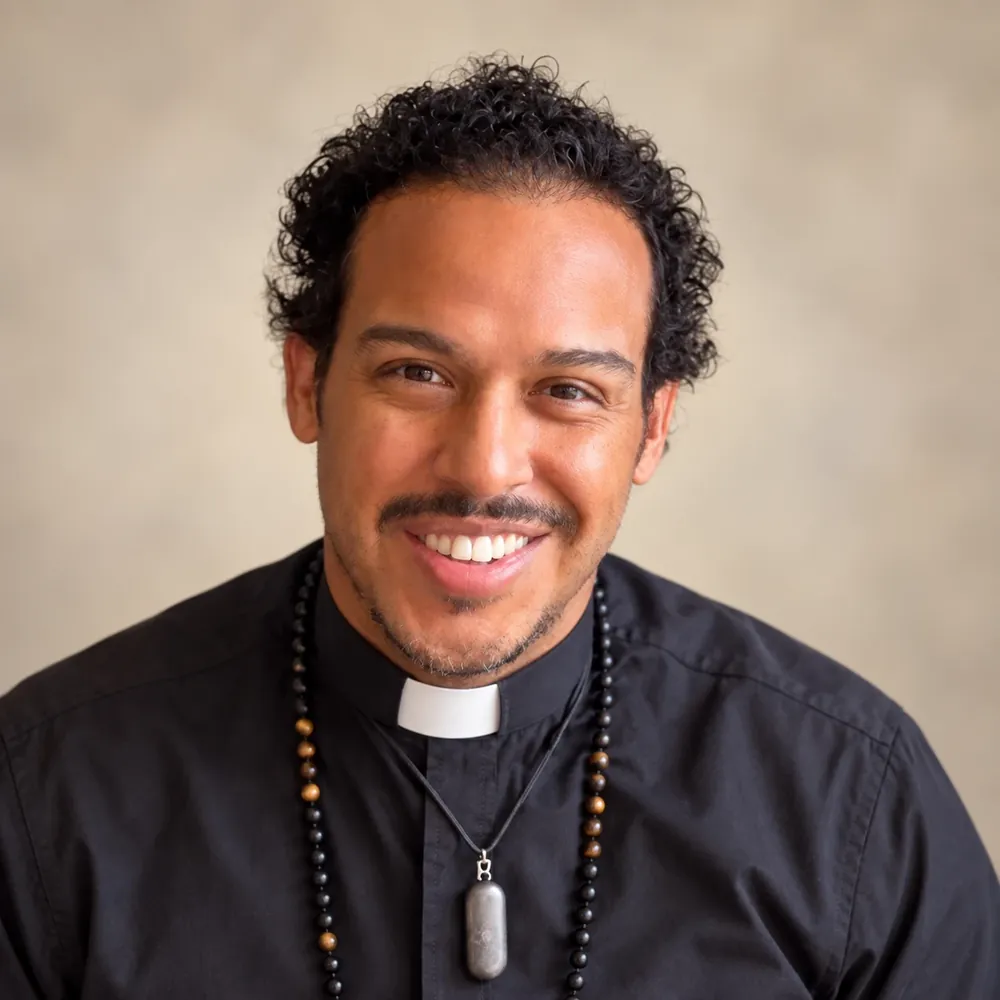
Robert Solano
I’m a psychedelic chaplain, a retired U.S. Army Lieutenant Colonel and Black Hawk pilot, and the founder of Heartspace Church. I write about healing, sacred medicine, leadership, and the spiritual path. I live with my wife, Zaira, and our three children.
Suggested Reading
Related Posts

KEEP READING
More Reflections
What Is Universal Intelligence? Why We Are All One Spirit
What is universal intelligence? My belief that we are all one spirit living different human experiences, and how that oneness changes the way we love and live.
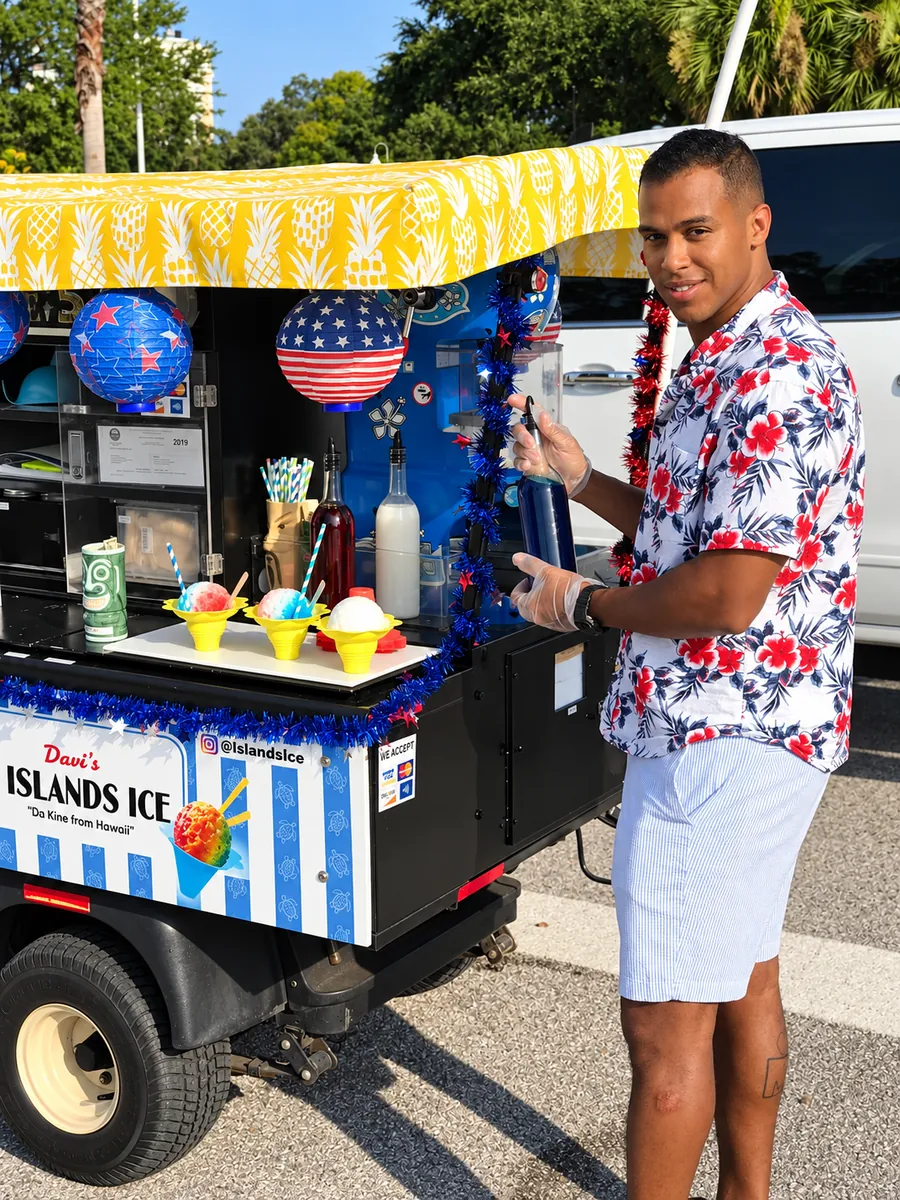
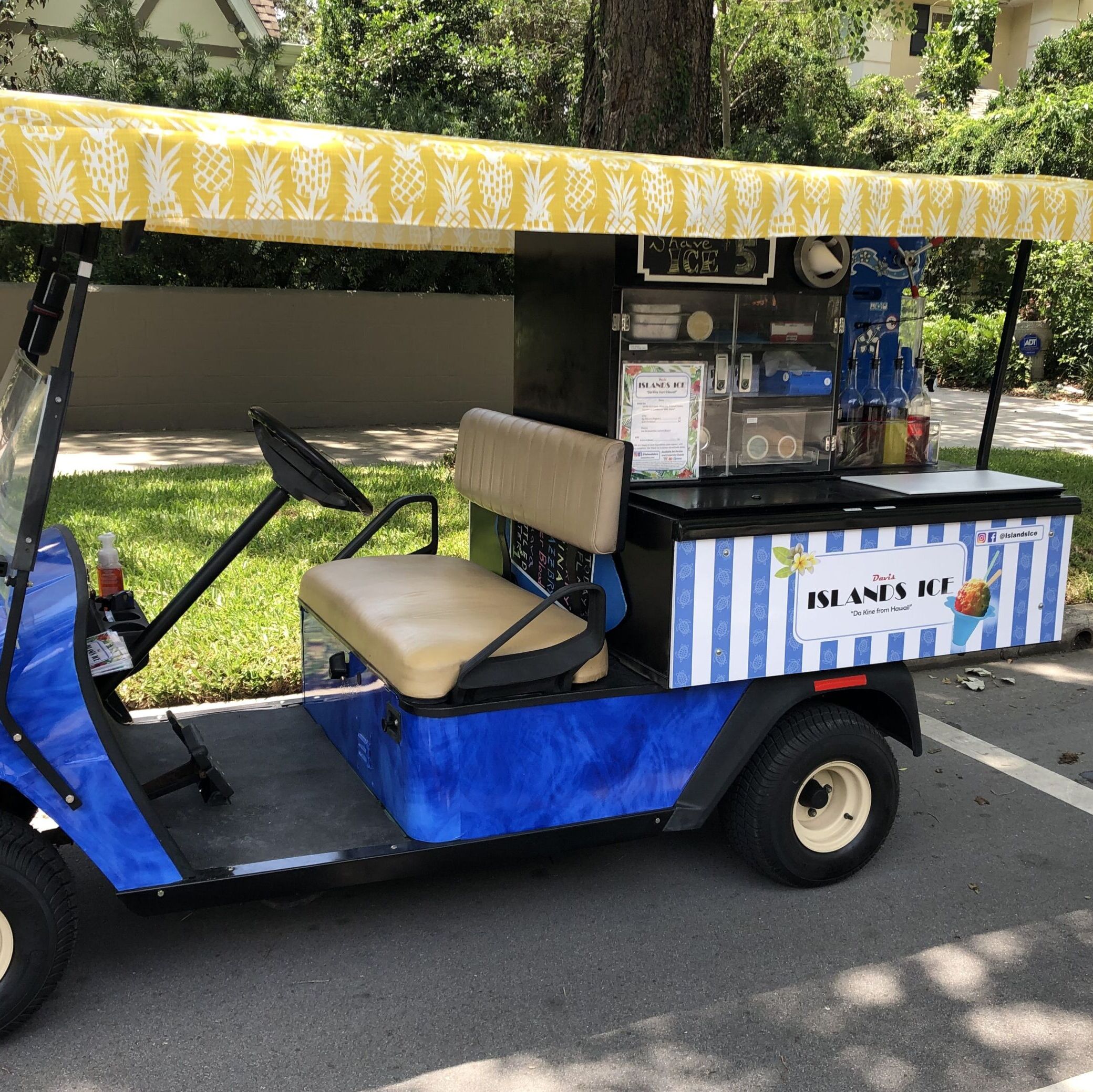
How I Built This: Building a Snow Cone Business in 30 Days
How I started a shave ice business on a golf cart in 30 days for about $10,000: my raw journal, every expense, the licenses I needed, and how it ended.
My Top 10 Essential Leadership Books
As a leadership consultant and avid reader, I am often asked if there are any books that I recommend for aspiring leaders or seasoned...
READ MORE →
Artists vs. Artificial Intelligence: The Debate over AI-Generated Art and Copyright Laws
The image to the left was created by artificial intelligence. It was trained using the image on the right, which is an original...
READ MORE →

Weekly Update: Three Kids. No Child Care. A Powerful Lesson. (July 15, 2025)
It's been a month since my Army retirement ceremony, and I'm learning that "time off" doesn't exist when you're suddenly the primary caregiver for three...
READ MORE →
STAY CONNECTED
The Sunday Letter
Enjoyed this? Once a week I send one honest letter — a story from my life, what I’m learning about God, healing, leadership, and love, and one question to carry into your week.
Free. Unsubscribe anytime.