The Origin of Catholic Eucharist and What Communion Means to Me
The Sunday Letter
One honest letter a week: stories, wellness news, and spiritual lessons to carry with you.
I was probably in seventh or eighth grade, serving as an altar boy, when a priest taught me something about communion that I still remember.
We were in the sacristy — the room where the priests and altar servers get ready for Mass. A few of us were hanging around, setting out the wafers, when one of the priests casually ate one. He saw us staring and waved us on: “Go ahead. Have one.”
We did. But it felt like we were getting away with something. These were the wafers we’d been taught to approach with reverence, and here we were eating them like crackers before Mass had even begun. The priest explained, with a shrug, that they hadn’t been consecrated. Right now, they were simply bread. During Mass, they would become the Eucharist.
I thought there was something beautiful about that. If you fully believe Catholic teaching, something extraordinary happens at every single Mass. Through consecration, ordinary bread and wine become the body and blood of Jesus Christ. Their appearance never changes, but their underlying reality does. The Church calls this transubstantiation. As a child, I tried hard to believe it. And to a certain extent, I did.
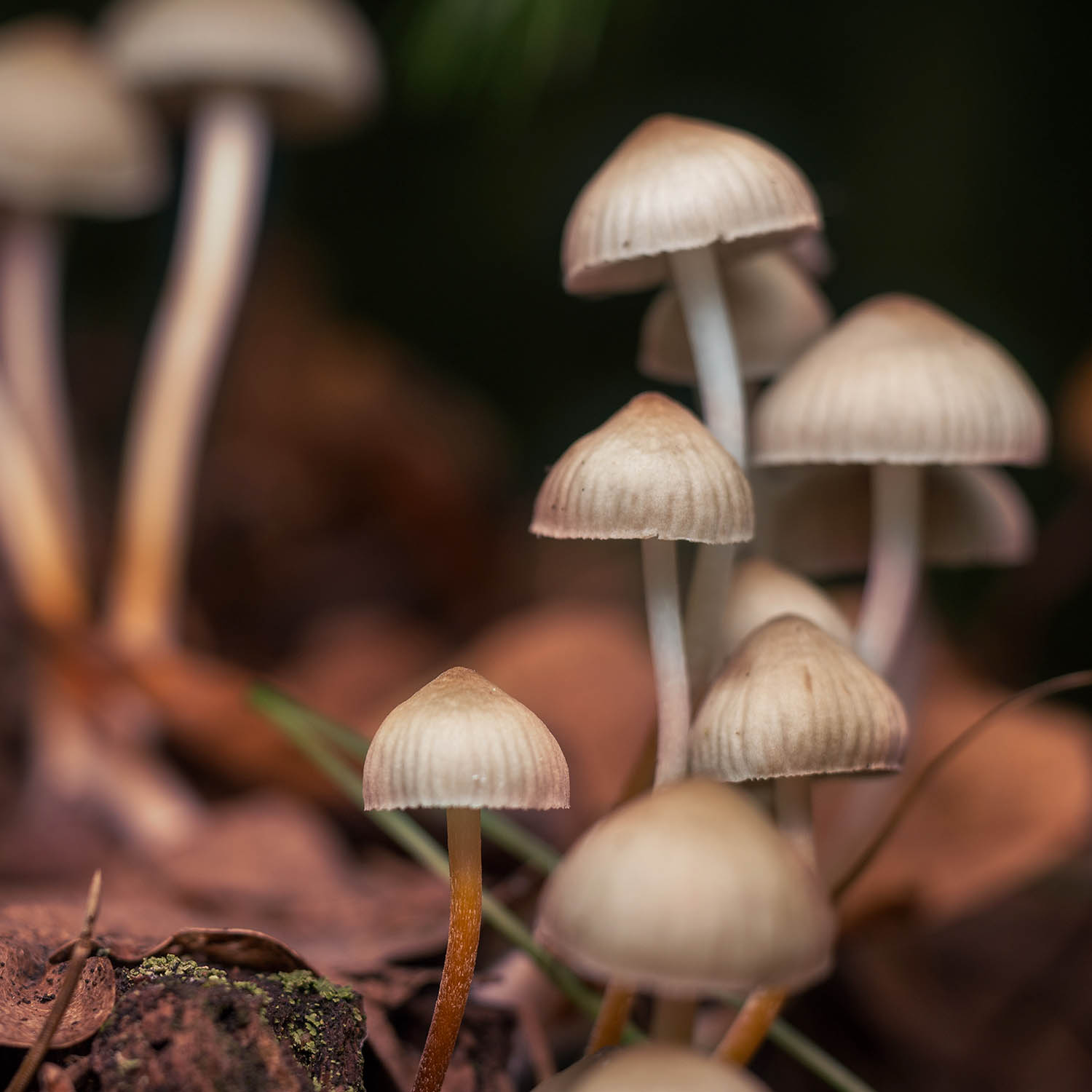
I left the Catholic faith in my mid-twenties. Many years later, my spiritual path led me to receive psilocybin mushrooms as a sacrament of communion. Through that practice I have experienced a connection with God — and with the love I associate with Christ — that words barely begin to describe.
That sometimes brings me into disagreement with Catholics who tell me my communion is unbiblical. They say mushrooms are not the sacrament Jesus instituted. Within Catholic theology, I understand the distinction. My practice is different. My faith is not Christian, and the Bible is not its governing authority. I don’t need to claim that Jesus used mushrooms, or that the Last Supper secretly involved them, to explain why they are sacred to me.
Still, Yeshua of Nazareth — the man most people call Jesus — is one of my teachers. Those conversations made me curious. What was the communion he shared? What did his earliest followers actually do? And how did those practices become the Eucharist I knew as an altar boy?
The history gave me a deeper appreciation for the tradition I left. It also helped me understand what I’m seeking in my own.
“Eucharist” means “thanksgiving”
Start with the word. Eucharist comes from the Greek eucharistia — it simply means thanksgiving. The Catholic Catechism itself explains this, and traces it back to the Jewish blessings offered to God, especially at meals. Gratitude was already woven into the religious world Jesus lived in.
The word’s origin doesn’t settle every question about the sacrament. But it does point my attention to the action at its heart: people gathering around food and giving thanks.
What the Gospels say — and what they don’t
The New Testament gives us more than interpretation of the Last Supper.
Matthew 26:26–29, Mark 14:22–25, and Luke 22:14–20 all recount Jesus sharing bread and a cup with his disciples and identifying them with his body and blood. Luke adds the instruction to repeat the act “in remembrance of me.” Paul passes along the same tradition in 1 Corinthians 11:23–26.
What the Bible does not give us is a the sacrament of Catholic Mass as I experienced it, or the later philosophical explanation called transubstantiation. Christians developed that language over centuries as they interpreted these texts and lived their faith.
And here’s something frequently overlooked: the Gospel of John — the most theologically intense of the four — does not contain the institution of the Eucharist at all. There’s no “this is my body, this is my blood” at John’s Last Supper. Instead, Jesus gets up from the meal, wraps a towel around his waist, and washes his disciples’ feet. Then he tells them: “I have set you an example, that you also should do just as I have done to you” (John 13:14–15). Later in the same scene, he names love for one another as the mark of his disciples (John 13:34–35).
I find that deeply moving. In the Gospel that reflects latest and deepest on Jesus’s meaning, the teacher kneels before his students and serves them.
That doesn’t mean John is silent about eating Christ’s flesh and drinking his blood. He puts that language earlier, in John 6. Jesus says, “For the bread of God is the bread that comes down from heaven and gives life to the world…. I am the bread of life. Whoever comes to me will never go hungry, and whoever believes in me will never be thirsty.”
But interestingly, there is no physical act of eating bread or drinking wine in this scene. Nor does John describe Jesus ever offering bread or wine and saying that it is his flesh or blood. John’s vivid language is about spiritual nourishment, not an act of eating physical bread or drinking wine.
For the first Christians, communion was a shared meal
So what did the earliest followers of Jesus actually do? They ate together.
Acts 2:42–47 describes believers breaking bread in their homes, eating “with glad and generous hearts,” and sharing their resources so no one went without. Worship, food, and care for one another all sit in the same breath.
But these were human communities, and their meals could expose the very divisions they hoped to heal. In 1 Corinthians 11:17–34, Paul rebukes a church where “one goes hungry while another gets drunk” — where the people with little are humiliated while the comfortable feast.
Later in 1 Corinthians 10:16–17 he describes how the one bread makes the many into one body. Communion with Christ and brought the community together as one.
The New Testament even has a name for these gatherings. Jude 1:12 calls them “love feasts” — in Greek, from agapē, love. And notice: Jude uses the phrase in a warning, about people whose conduct corrupts the meal. Even calling it a “love feast” didn’t guarantee everyone behaved lovingly.
What the earliest records outside the Bible show
The writings beyond the New Testament fill in the picture.
The Didache, an early Christian manual usually dated to the late first or early second century, preserves actual prayers of thanksgiving said over a cup and broken bread. One of them imagines scattered grain gathered into a single loaf, and asks that the Church be gathered together the same way. These are prayers of gratitude — they don’t yet contain the familiar words declaring the bread and wine to be Christ’s body and blood. (That same text, tellingly, already limits the meal to the baptized, and tells believers to reconcile with one another before they gather.)
Around 112 AD, the Roman governor Pliny the Younger wrote to the Emperor Trajan describing Christians who met before dawn to sing to Christ “as to a god,” then reassembled later to share a meal.
By about 155 AD, Justin Martyr gives us one of the first descriptions of a recognizable Sunday service: readings, a sermon, prayers, thanksgiving over bread and wine mixed with water, distribution by deacons (including to members who were absent), and a collection for those in need. In the same work he says plainly that this food is received as the flesh and blood of Christ, not as ordinary bread.
Early Christian practices were not universal though, and practices appear to have varied by communities.
Writing around 197 AD, Tertullian describes the Christian agapē as a meal that feeds the hungry, opens and closes with prayer, and calls for restraint in drinking. By the fourth century, a local council (the Synod of Laodicea, Canon 28) was prohibiting love feasts inside church buildings and eventually the practice lost significance.
When the bread became the body
The belief that the bread becomes Christ also runs earlier — and develops later — than most people assume.
In his Letter to the Smyrnaeans, written in the early second century, Ignatius of Antioch criticizes people who won’t acknowledge the Eucharist as “the flesh of Jesus Christ.” Although his own description of this offers mixed interpretations.
In his Letter to the Trallians, chapter 8, he writes that faith is “the flesh of the Lord” and love is “the blood of Jesus Christ,” and then urges his readers to hold no grudge against their neighbors.
The formal doctrine of transubstantiation emerged much later than most realize. The philosophical claim that the bread and wine become Christ’s body and blood while keeping every appearance of bread and wine — was affirmed by the Church at the Fourth Lateran Council in 1215 AD, more than twelve hundred years after Jesus walked the earth. Thomas Aquinas gave it its full architecture later that century, and the Council of Trent hardened it into dogma in 1551, in reaction to the Reformation.
I’m not laying any of this out to tear the Mass down. I think it’s genuinely beautiful and deep — I celebrated it well over a thousand times. I’m only saying that communion didn’t fall from heaven as a fixed, biblical, Sunday-morning wafer. It was built — slowly, humanly, lovingly, and sometimes contentiously — over more than a millennium.
A word about the sacrament I receive now
People usually want me to compare the two sacraments directly — the wine of the Mass and the mushroom of my own practice — so I’ll say a little, and then get out of the way, because this part isn’t really my argument.
On the one side, alcohol. The World Health Organization now classifies it as a toxic, dependence-producing carcinogen, and says there is no established safe level of consumption.
On the other, psilocybin, which research has begun to take seriously. In carefully supported settings it has shown real promise for depression, for anxiety and existential distress in people facing life-threatening illness, and for alcohol use disorder.
Although psilocybin carries some risk, those risk pale in comparison to alcohol. Last year, about 2,200 Americans died of alcohol poisoning, while zero died of psilocybin. Even in small amounts, the benefits of micro dosing psilocybin are far greater than any amount of alcohol.
I could go on about the health benefits of psilocybin, but that isn’t really the point of this article.
For me, receiving the mushroom as a sacrament has deepened my connection to God and to the love I recognize in Yeshua’s teaching, in ways I can’t fully put into words. That’s my testimony.
How I take communion today
Although I practice psilocybin as a Sacrament of Communion, and although I do not consider myself Christian, I still practice Eucharist and honor the Last Supper.
Every evening, my family gathers around food and gives thanks. Not the monotone grace I grew up with — “Bless us, O Lord, and these thy gifts…” — but the real thing: we say out loud what we love, what mattered that day, who we’re grateful for. I want my children to notice the gifts already sitting in their lives, and to hear gratitude in their own voices. I think of those meals as Eucharist in the truest sense of the word: thanksgiving.
On Sundays, I keep a Sabbath — a whole day given to the people I love. At its close, I break bread and pour wine with family and friends, and give thanks again. Those moments connect me to the meal Jesus shared and to the communities that remembered him around their own tables. For me, that has become more powerful than anything I felt in a chapel on a Sunday morning — and I can say that while still holding the beauty I found there as a child.
And then there is the sacrament of my church, received in deep ceremony — the one that has opened Christ and God to me in forms the Sunday wafer never did. That deserves its own telling, another day.
For me, that experience of communion has become more powerful than what I experienced in a Catholic chapel on Sunday morning. I can say that while still remembering the beauty I found there as a child.
I still think about that priest eating an unconsecrated wafer in the sacristy. He was explaining the distinction his tradition makes between ordinary bread and the consecrated host. Today, I find myself drawn to the ways a shared meal can help me recognize the sacred in the people sitting beside me.
When we feed one another, listen closely, offer forgiveness, and give thanks, I feel connected to the teacher I love. When I receive our sacrament with reverence, I experience that connection in another profound way.
This is what communion has come to mean in my life. I hope its meaning can be seen in how I love the people around me.
If this story stirred something in you, I’d love to keep the conversation going. Every Sunday I send one honest letter about healing, sacred medicine, the spiritual path, and what life is teaching me along the way — plus one question to carry into your week.
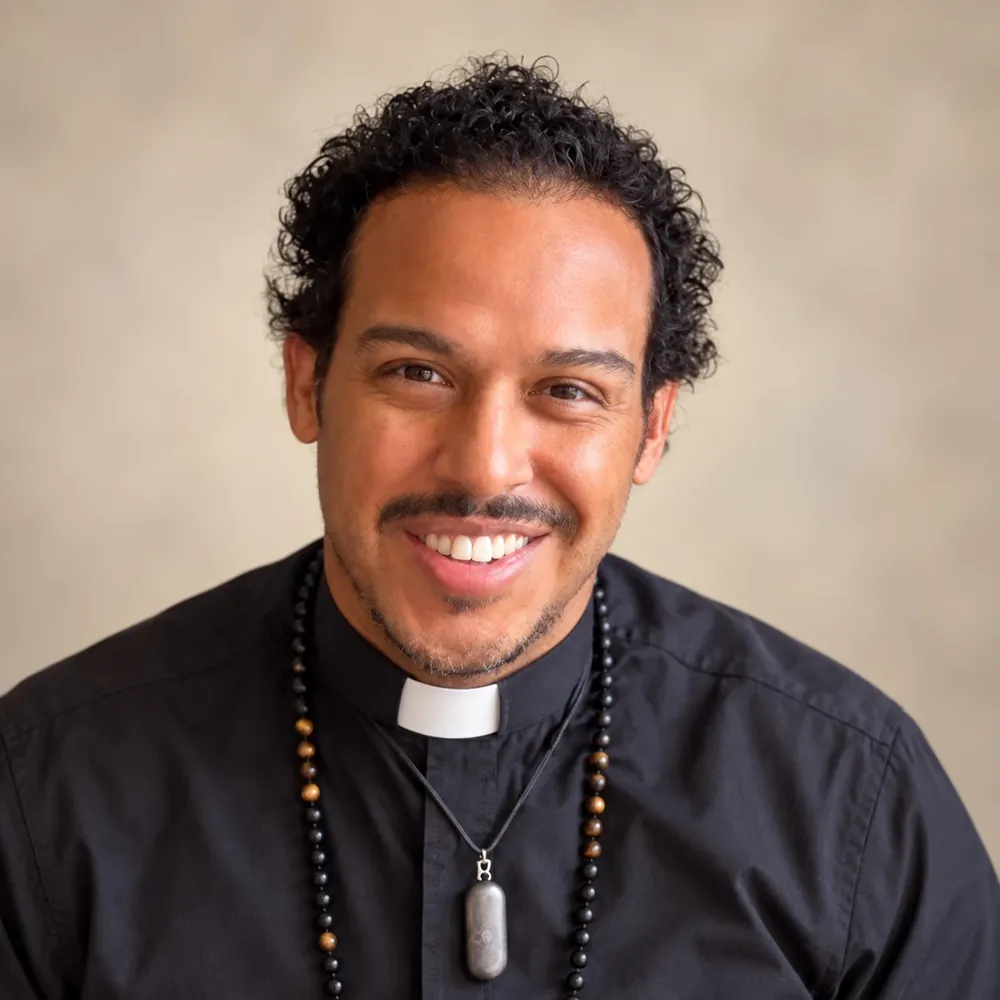
Robert Solano
I’m a psychedelic chaplain, a retired U.S. Army Lieutenant Colonel and Black Hawk pilot, and the founder of Heartspace Church. I write about healing, sacred medicine, leadership, and the spiritual path. I live with my wife, Zaira, and our three children.
Suggested Reading
Related Posts
KEEP READING
More Reflections
Cohoba: Rediscovering Taíno Psychedelics and Plant Medicine
Tobacco in an Amazon maloka sent me searching for the sacred plants of my own Taíno ancestors — and led me to cohoba, the visionary sacrament the Europeans found in the Caribbean.

The Illusion of Choice: How Your Conscious Mind Deceives You
Your brain decides before you know it. What Libet, Haynes, and split-brain research reveal about free will, and how to train the mind that does the choosing.

Weekly Update: Three Kids. No Child Care. A Powerful Lesson. (July 15, 2025)
It's been a month since my Army retirement ceremony, and I'm learning that "time off" doesn't exist when you're suddenly the primary caregiver for three...
READ MORE →
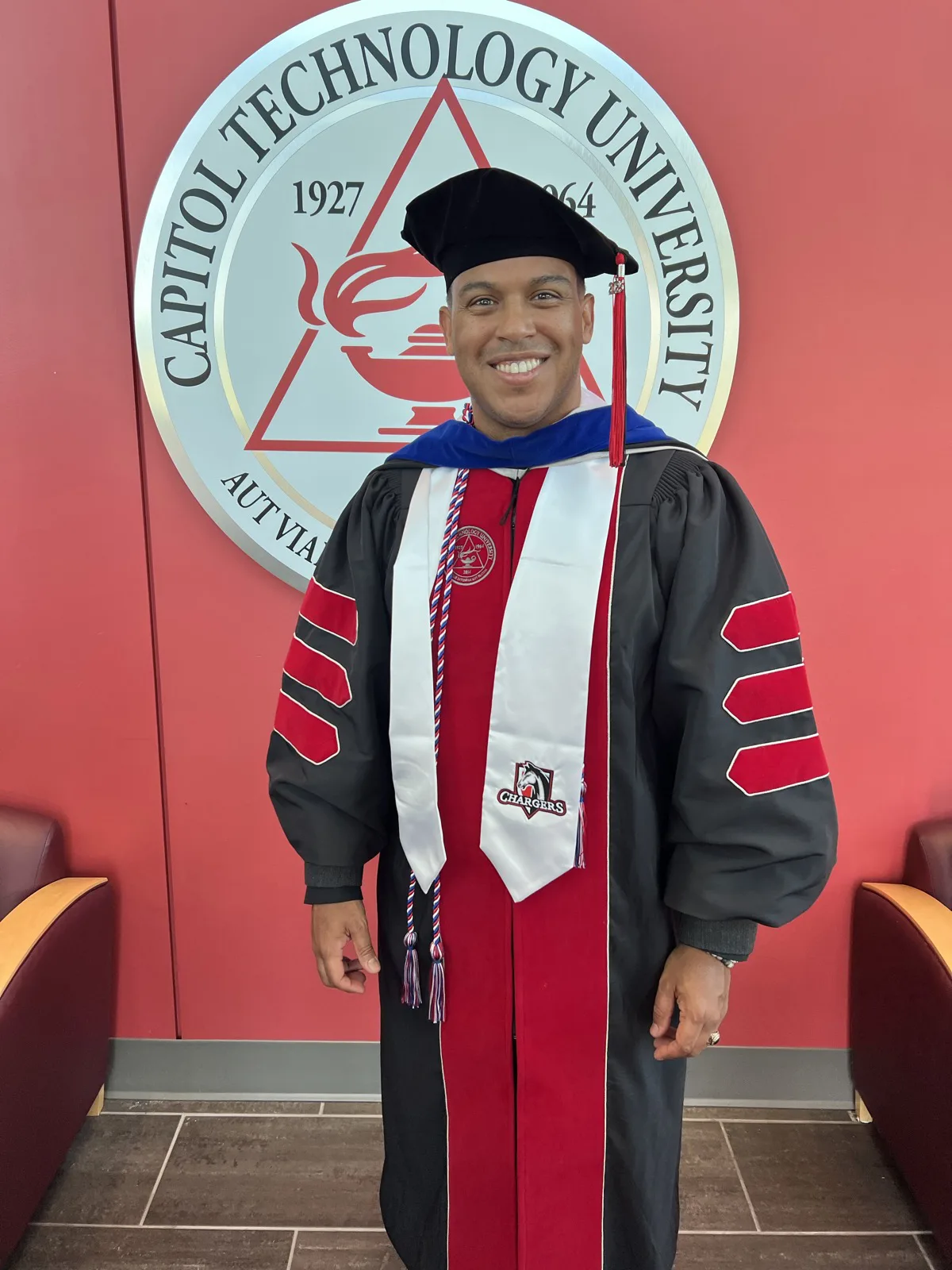
Why I Quit My PhD, and Why I Went Back and Finished It
I quit my PhD when I realized I was chasing a title to prove my worth. Years later, I went back and finished. What I learned on both sides of the decision.

Trusting Your Intuition: The Silent Power of Our Subconscious Mind
Analysis has limits. How I learned to trust my gut in hiring, leadership, and life, why intuition works, and how to balance it with careful decision-making.
STAY CONNECTED
The Sunday Letter
Enjoyed this? Once a week I send one honest letter — a story from my life, what I’m learning about God, healing, leadership, and love, and one question to carry into your week.
Free. Unsubscribe anytime.