An Open Letter to a Former Associate
Dear Former Associate,
A few weeks ago, you gave us notice that you were leaving our law firm. You agreed to stay on a few weeks to close out some of your open cases. We are very grateful that you provided notice and that you were willing to continue to work for a few weeks. Your actions were very professional; the same level of professionalism you brought to work every day for the past two years. Thank you.
Likewise, it was very professional to inform us that you planned to start your own law firm. Regrettably, we had a conflict of interest. We terminated your employment contract early but believe that we gave you fair pay and severance. To be clear, anyone that practices or plans to practice immigration law is a business competitor. This was not personal; it is the nature of business.
In lieu of using your name, I have addressed this letter towards a friend because we do still consider you our friend. We wish you success with your law firm. We hope that you learned a lot about business while working with us and that you will develop your own unique business strategy and company procedures. This is a large market, and we have no doubt that there are many potential new clients that need your services. You are a great attorney!
Since you are our friend, I want to share some of our experiences in hopes that you will avoid the pain that we lived through. My wife, Zaira Solano, started this business with a laptop, a cell phone, and two months’ rent in her bank account—with exactly $100 to spare. I met her when she was two years into her business. For the past five years, I have been privileged to watch the business grow through its phases. I frequently help with the business on the nights and weekends after I work my normal day job.
When Zaira started Solano Law Firm, she decided that she would be a business owner. Countless attorneys practice law, and many start their own company, but few make the conscious decision to be a business owner. Being an entrepreneur requires a different mindset than being a lawyer. I’m sure you already know that running a new business is extremely difficult. The first few years were challenging for us because Zaira had to do everything, from being the sales team to the marketing specialist, receptionist, accountant, bookkeeper, human resource manager, technology officer, and networking every day, on top of her duties as an attorney. When you joined the team, we had already hired specialists for each of these activities or outsourced them. Our monthly payroll expenses are now approximately $62,000, and we spend an additional $10,000-$20,000 per month outsourcing marketing, bookkeeping, information technology, accounting, and other management tasks. Even the smallest business is a machine with many moving parts.
My recommendation to you is to hire help or outsource business management tasks as soon as possible. We should have hired and outsourced more, and sooner. I can’t begin to count how many hours I spent learning web design, pay-per-click, email marketing, IRS regulations, etc. Or how many hours I spent combing over resumes and interviewing poor job applicants. There are invariably other experts that are better at these skills than we will ever be. Because of the overwhelming workload and variety of tasks, the first few years of our business crushed our souls. It strained our relationship. We had more than one nervous breakdown and a breakup. Now we find happiness when we can focus on the few passion areas that we love—helping clients and developing our team.
I’m sure you already know that running a new business is extremely difficult. The first few years were challenging for us because Zaira had to do everything, from being the sales team to the marketing specialist, receptionist, accountant, bookkeeper, human resource manager, technology officer, and networking every day, on top of her duties as an attorney. When you joined the team, we had already hired specialists for each of these activities or outsourced them. Our monthly payroll expenses are now approximately $62,000, and we spend an additional $10,000-$20,000 per month outsourcing marketing, bookkeeping, information technology, accounting, and other management tasks. Even the smallest business is a machine with many moving parts.
My recommendation to you is to hire help or outsource business management tasks as soon as possible. We should have hired and outsourced more, and sooner. I can’t begin to count how many hours I spent learning web design, pay-per-click, email marketing, IRS regulations, etc. Or how many hours I spent combing over resumes and interviewing poor job applicants. There are invariably other experts that are better at these skills than we will ever be. Because of the overwhelming workload and variety of tasks, the first few years of our business crushed our souls. It strained our relationship. We had more than one nervous breakdown and a breakup. Now we find happiness when we can focus on the few passion areas that we love—helping clients and developing our team.
Entrepreneurship also changed our relationship. Years ago, I believed in work-life balance and enjoyed the idea of being able to leave work in the office to come home and focus on the family. For an entrepreneur and small business owner, there is no such thing as work-life balance. We are always “on.” We cannot have a conversation without talking about the business in some fashion. The business is not the only focus in our lives, but it manages to weave into every aspect of our existence. Most of our vacations are business vacations, most of our friends are business colleagues, most of our books are business books, network events are date nights, and many of our friends raise their children in their businesses. Zaira regularly works 80 hours a week and spends much more time than that talking and thinking about the business. I enjoy working hard, but Zaira is beautifully relentless.
Zaira and I had one particular date night a few years ago. We were trying to figure out how to remotely manage an office in Atlanta while living in Florida. This was a topic that we argued about multiple times. On this date night, Zaira prepared a PowerPoint presentation for me on how we could make the new business model work. Imagine! Friday night in downtown Orlando, sitting at a beautiful cafe next to Lake Eola, most couples were out getting a nice dinner while the babysitter watched their children. Lovebirds walked by, dressed up on their way to go dancing or see a play at the theater, and here Zaira and I are having a glass of wine and reviewing our business plan on an iPad. That’s romantic!
At first, I fought against this. I tried to maintain work-life balance and separate the two worlds. This put a lot of strain on our relationship. My recommendation is that you forget the myth of work-life balance. We were a lot happier when we stopped fighting our natural entrepreneurial spirits.
For entrepreneurs, there is no such thing as work-life balance. There is only life, and life includes the business, our relationships, our family, and friends. They all support each other. Now, we schedule date nights and reading time at the beach the same way we schedule conference calls and performance reviews (quarterly calendar meetings). We regularly talk about business at home at all hours of the day, night, and weekends. The business is an extension of our relationship. We love each other. We love the world. We want to develop a deep and meaningful relationship, and we want to have a meaningful impact on the world. The business is an extension of our love.
Finally, I want to share with you a valuable lesson that we learned about growth. Last year, your salary as an associate was greater than Zaira’s, the CEO. On paper, you may have seen large revenue numbers, but as I already discussed, we have huge overhead costs. Our salary costs are high, the cost of service providers is much higher than you probably expected, rent and other facilities are expensive, and there are numerous other costs associated with operating the business. Year after year, we have grown between 33% to 125% annually. We grow because we continue to invest in the business. Last year, we hired our office administrator. This was an expensive hire. It cost us over $10,000 just to find and recruit her. It cost us almost another $10,000 to train her. These costs and her entire salary came out of Zaira’s pay. For four months, Zaira did not pay herself anything to cover the initial investment in the office administrator. For four months, the work didn’t stop, but the pay sure did.
We reinvest a lot into the firm. Hiring our office administrator is one example. Other examples include the firm retreats, family days, coaching services, and marketing campaigns, to name a few. These investments are required for growth, and growth allows us to help as many clients as possible.
This year, we are in a better position. If Zaira decided to level her growth, she could pay herself over $100,000 this year. But small changes to the business could dramatically impact her salary and benefits. For example, if she decided to hire two new paralegals or if there was a 30% dip in new clients, Zaira’s salary would reduce to near minimum wage. Imagine working 80+ hours a week as an attorney and CEO to make minimum wage!
The truth that few people talk about is that small business growth is cyclic. You will have hard times and good times. You will have some months where you will make more money than you ever dreamed possible, and other months when you will question your life choices as you cry yourself to sleep.
My recommendation is to expect it, prepare for it, and don’t be surprised when the world appears to be crashing down on you. We fall so that we can learn to pick ourselves back up. This is a hard lesson, but one of the most important. It is why most solo-practitioners give up after six months and either apply to work for a larger law firm or try to teach at a university instead.
In conclusion, we really do wish you the best of luck as you start your own business. We have no ill-will towards you as long as you have no ill-will towards us. We have an abundance mindset and welcome anyone that is compassionate, professional, and eager to serve the immigrant community. They are severely underserviced and need our help.
My wife is the CEO, not me, but I am sure that she will agree that being an entrepreneur is the most difficult thing she has ever done in her life, but also the most rewarding—cliché, I know. Although Zaira and I are not parents, I believe that some mothers will even tell you that being an entrepreneur is more difficult than raising a child.
We wish you the best of luck and look forward to seeing your business grow and develop.
Saludos,
Robert Solano
Chief Advisor
Solano Immigration Law Firm


Artists vs. Artificial Intelligence: The Debate over AI-Generated Art and Copyright Laws
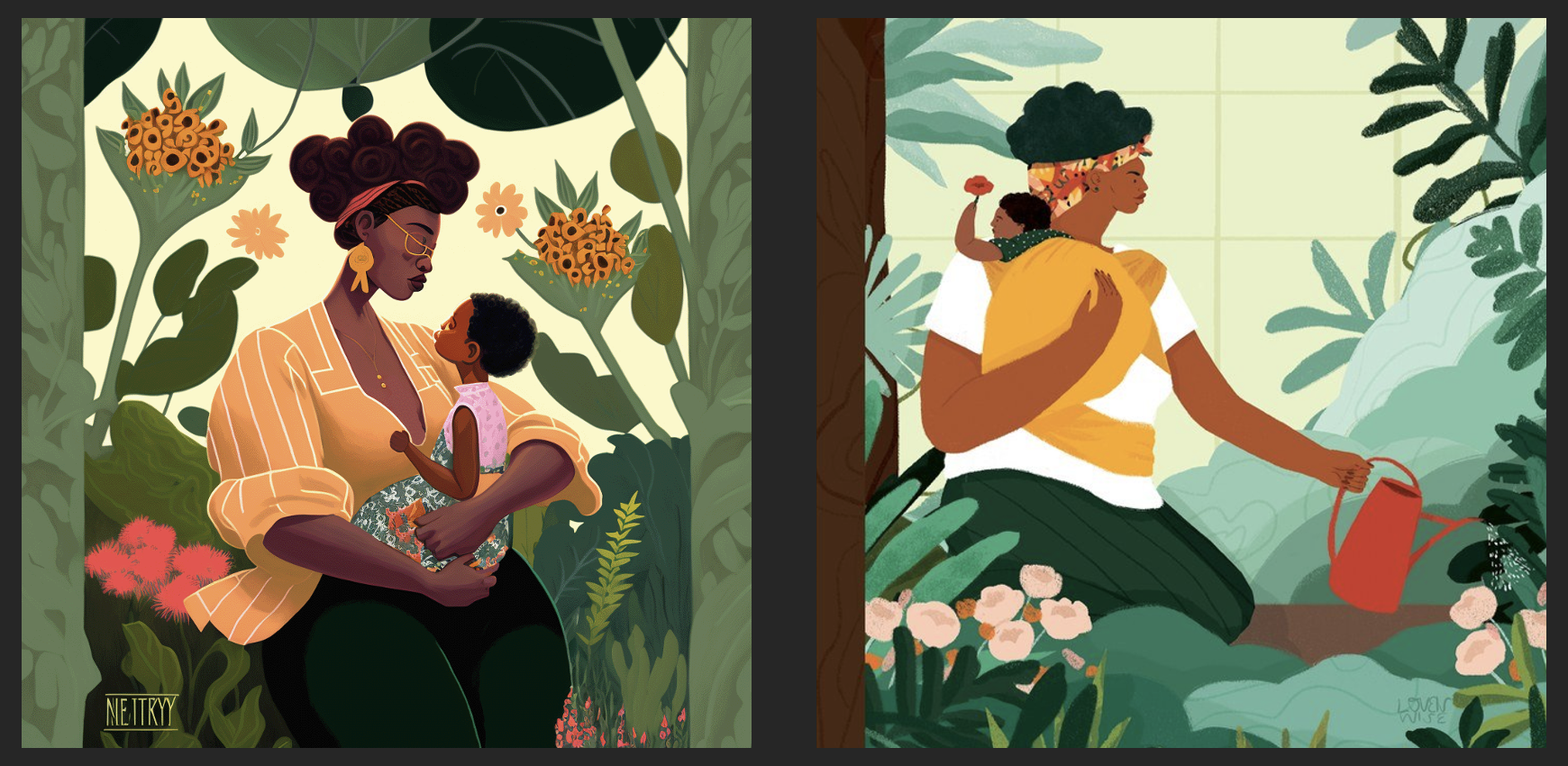
The image to the left was created by artificial intelligence. It was trained using the image on the right, which is an original copyrighted work by the acclaimed artist Loveis Wise.
The rise of artificial intelligence in the art world is creating a stir among artists. The ease of access to AI image generation tools has led to a surge in the production of AI-generated artwork that closely resembles human-made art. For example, the Lensa app, which allows users to create their own digital avatars using AI, topped app store charts with over 5 million downloads in one week. In other news, AI-generated artwork has won awards at art competitions that were traditionally won by humans. And even further, myself and other artists have begun using AI to write and illustrate children’s books, which AI can do exponentially faster and cheaper than a human artist. These examples showcase how AI technology is changing the art world, but as AI-generated art becomes more prevalent, some artists are starting to feel threatened. They argue that AI is “stealing” their work and that it should be illegal for these algorithms to create art without the permission of the human artist.
AI image generation tools like Lensa, Midjourney, and DALL-E 2 are machine learning models. They were trained on a large dataset of images and texts, and in many cases they were trained with copyrighted artwork. This means that these programs are more likely to churn out images or texts that resemble those they’ve already been exposed to, as opposed to completely original creations. In certain cases, the outcome can be almost identical to an original work of art or artist’s style. Moreover, these programs never got the green light from artists before using their works for training the machine learning models, and many artists argue that these programs should be prohibited from using their work or likeness without their consent.
The truth is, however, that AI-generated art is perfectly legal in the United States. Despite the resistance of authors and artists, two key legal precedents protect these AI programs. In 2013, the U.S. Second Circuit’s ruling in Authors Guild v. Google was a landmark victory for AI programs and their creators. In this case, the court upheld that, “training algorithms on copyrighted data is not illegal.” The court’s statement declared that Google’s algorithm, “provides significant public benefits. It advances the progress of the arts and sciences, while maintaining respectful consideration for the rights of authors and other creative individuals, and without adversely impacting the rights of copyright holders.”
The Authors Guild contested this decision and asked the Supreme Court to review it, but their petition was denied – leaving the Second Circuit’s conclusion in favor of Google unaltered. This ruling established a significant precedent for artificial intelligence development.
The second important legal precedent is from the 1991 case, Feist Publications, Inc v. Rural Telephone Services Company, Inc. In this case, Rural Telephone Services Company argued that Feist Publications had infringed on its copyright by creating a phone directory that was almost identical to the White Pages created by Rural Telephone Services. The ruling in favor of Feist established an important precedent for artificial intelligence.
The Supreme Court upheld that this was not copyright infringement since even the “slightest amount” of creativity counts as an original work. The ruling declared that works are considered original as long as new works “possess some creative spark, ‘no matter how crude, humble or obvious.’”
For artists, the implications of this ruling are that there is limited protection against artificial intelligence algorithms. As long as the AI-generated artwork has a slight amount of variation, it can be considered an original work, even if it closely resembles an artist’s copyrighted work. This is unfortunate news for artists.
More concerning than the legality of copyright law, is the prospect that an influx of AI-generated art threatens artists’ livelihoods. Some artists have even argued that AI-generated art should be illegal because it takes away jobs from human artists. Some of these artists have joined together in a class action lawsuit against companies like Stability AI, DeviantArt, and Midjourney, claiming that their AI programs and datasets violate fair use laws. While those legal battles will likely continue for years to come, the prospects do not look promising for the artists.
The challenge of fair use law is that the burden of proof rests on the copyright owner, the artists, who must demonstrate the impact of the infringement on their work. It could easily be argued that AI-generated artwork is a new market and is not of the same value as the original work, therefore it doesn’t affect the market or the value of the artists copyrighted work. Additionally, with the recent widespread proliferation of AI art programs, and significant investments by technology companies, it is doubtful that artists will be able to stop the forthcoming AI tidal wave.
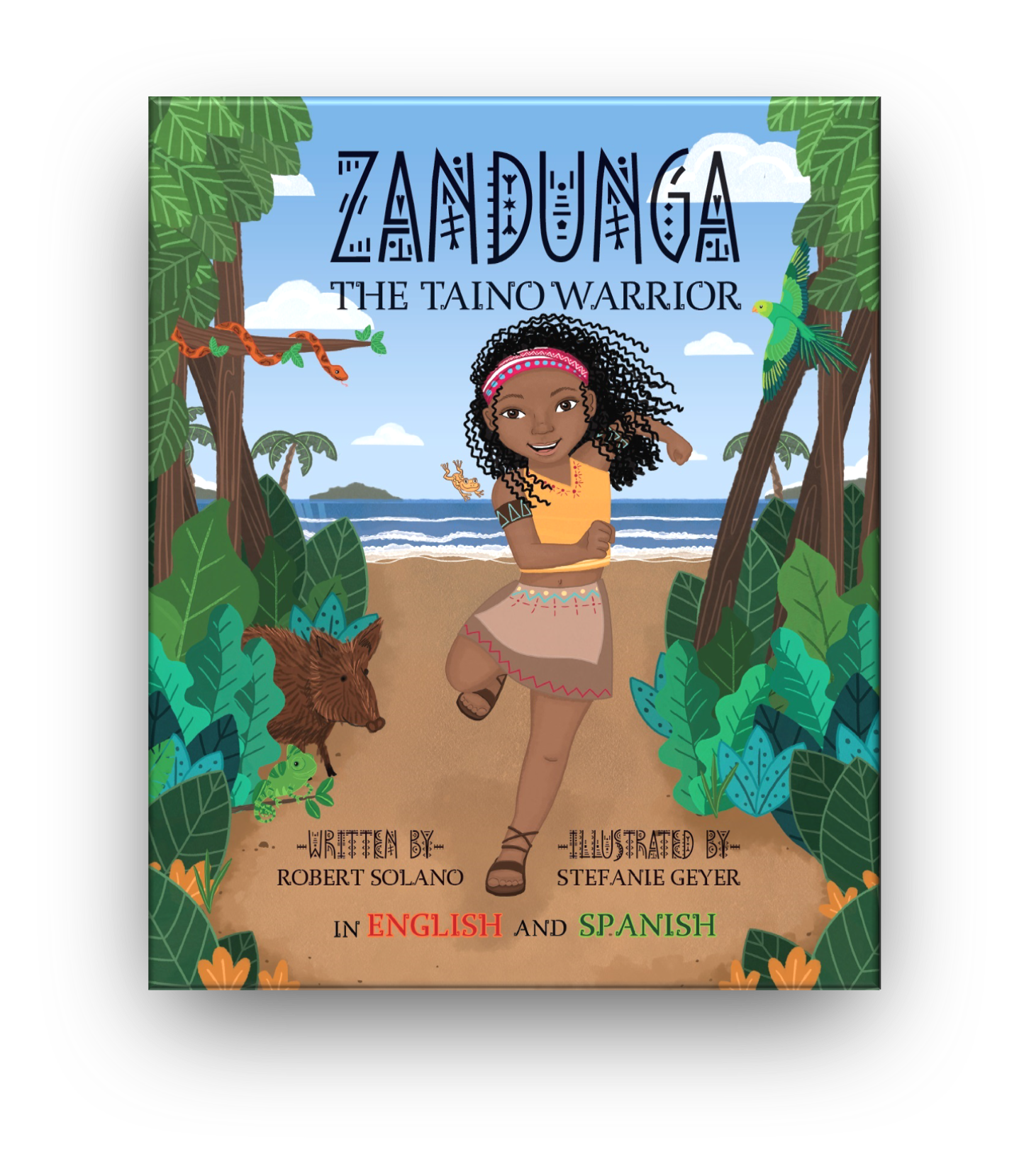
I wrote and illustrated “Zandunga” using a human illustrator. It took about 6 months and cost over $3,000.
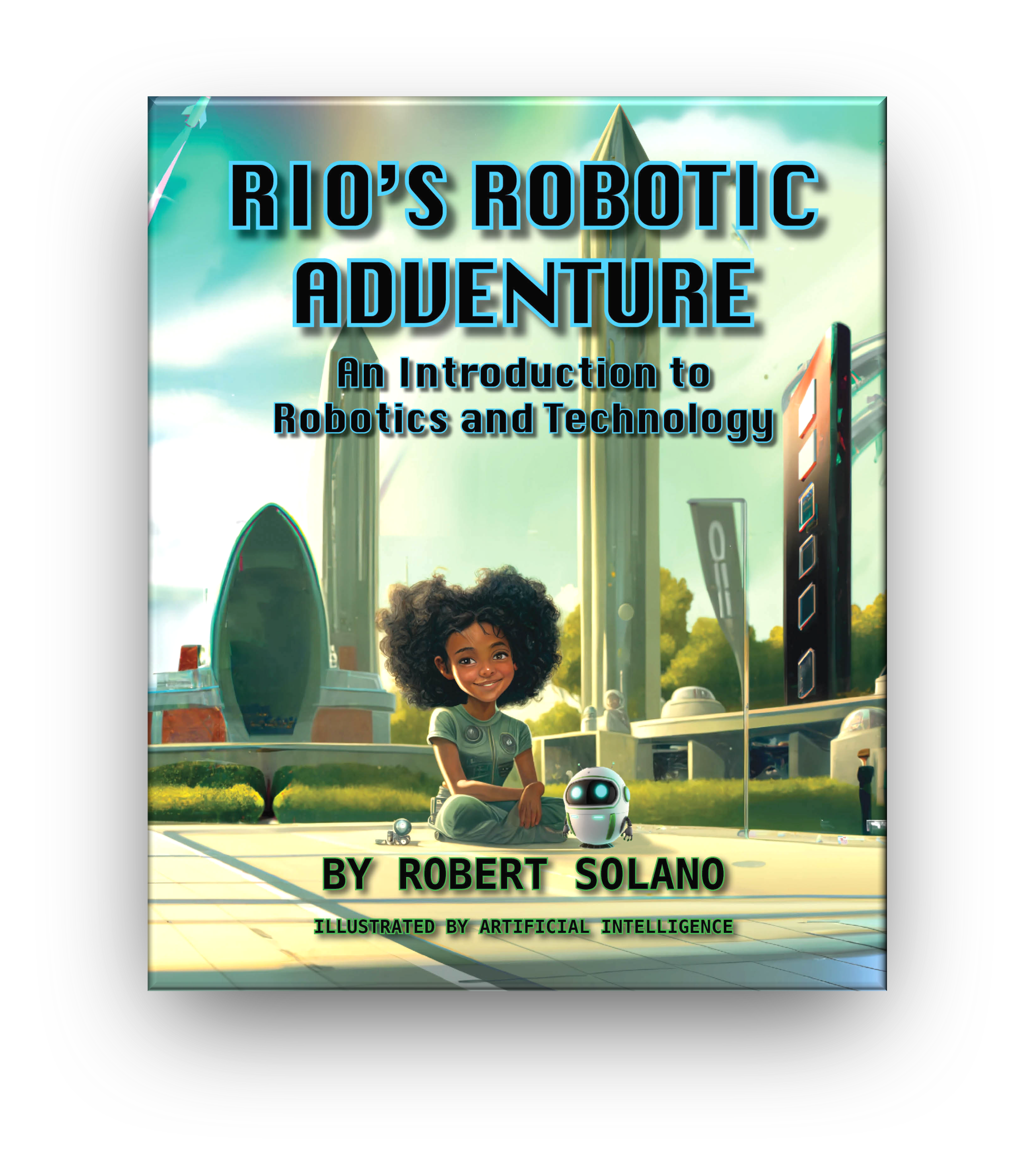
In comparison, “Rio’s Robotic Adventure” took about one week to write and illustrate using AI. It cost less than 50 dollars.
The use of artificial intelligence programs has revolutionized the creative process, allowing aspiring artists and writers from all walks of life to tell their stories and share their artwork with the world.
As an example, I used ChatGPT, Midjourney, and DALL-E-2 to write, illustrate, and publish a children’s book in less than 8 hours. The entire process also cost me less than $50. In comparison, my previous human-illustrated and edited children’s book took almost 6 months and over $3,000 to publish. In general, AI-generated artwork is significantly cheaper, faster, and more efficient than wholly human art.
The good news is that AI artwork is a revolutionary technology but it lacks the creativity and emotional depth that only a human artist can possess. I have written two books using artificial intelligence. While I was able to use AI to write and illustrate these books, neither of them compare to my first human-illustrated book. AI does not have the ability, yet, to capture the depth of emotion, nuance, and creativity that human artists possess.
The rise of AI-generated art does not mean that human artists will disappear. In fact, it can open up new opportunities for artists. AI-generated art can be used as a tool for human artists to create new works, and it can also be used to generate new forms of art that were not possible before.
I am particularly hopeful that the quality and cheaper cost of using artificial intelligence to create art will allow for more disenfranchised communities to create new art forms. For example, there are many parallels between AI artwork and the evolution of Hip Hop in the 1980s. During this time, African American communities, who didn’t have access to expensive recording studios and record labels, turned to easier and cheaper turn-tables to create a new style of music. They created a new genre of music that upturned the entire industry. Simularly, I predict that AI artwork will transform many art industries in novel ways.
Unfortunately, we will likely see a lot of turmoil in the art world as the industry adapts to this new technology. Traditional artists will struggle to compete with artificial intelligence and will try to prevent its advancement before a new generation of artists evolve who will use artificial intelligence to take their artwork to the next level.