
Why Your Side Quests Matter: What 21 Years in the Army and a Video Game Taught Me About Purpose

I've done a lot of interesting things in my life, to include building a snow cone business in 30 days.
A few days ago I was coaching a group of business leaders and realized I had no idea what to say.
That’s not normally my problem. I’ve briefed generals, been on the news, and have briefed the President of the United States. I’ve flown into places where saying the wrong thing on the radio gets people hurt. I’ve stood in front of a circle of people at Heartspace Church and talked about God and consciousness and grief. Talking is not the hard part.
But this was the first time I’d spoken to a corporate group since retiring from the Army and starting a psychedelic church, which is a sentence I still find pretty funny to write. And in the weeks before the talk, I kept circling the same question:
What could I possibly say that connects all the different pieces of my life?
Twenty-one years in the Army. Flying Blackhawks in combat. Leading soldiers. Managing billions of dollars in government contracts. Then retiring, growing my hair out, and starting an interfaith church centered on spirituality, community, and psychedelic medicine.
What does a psychedelic church have to do with a room full of executives trying to grow a business?
I was getting my kids ready for school that morning, thinking through my thoughts, and none of it was working.
Why am I even coaching this group, I thought. This kind of coaching isn’t my main quest, it’s a side quest.
And then I thought about Zelda.
Stay with me.
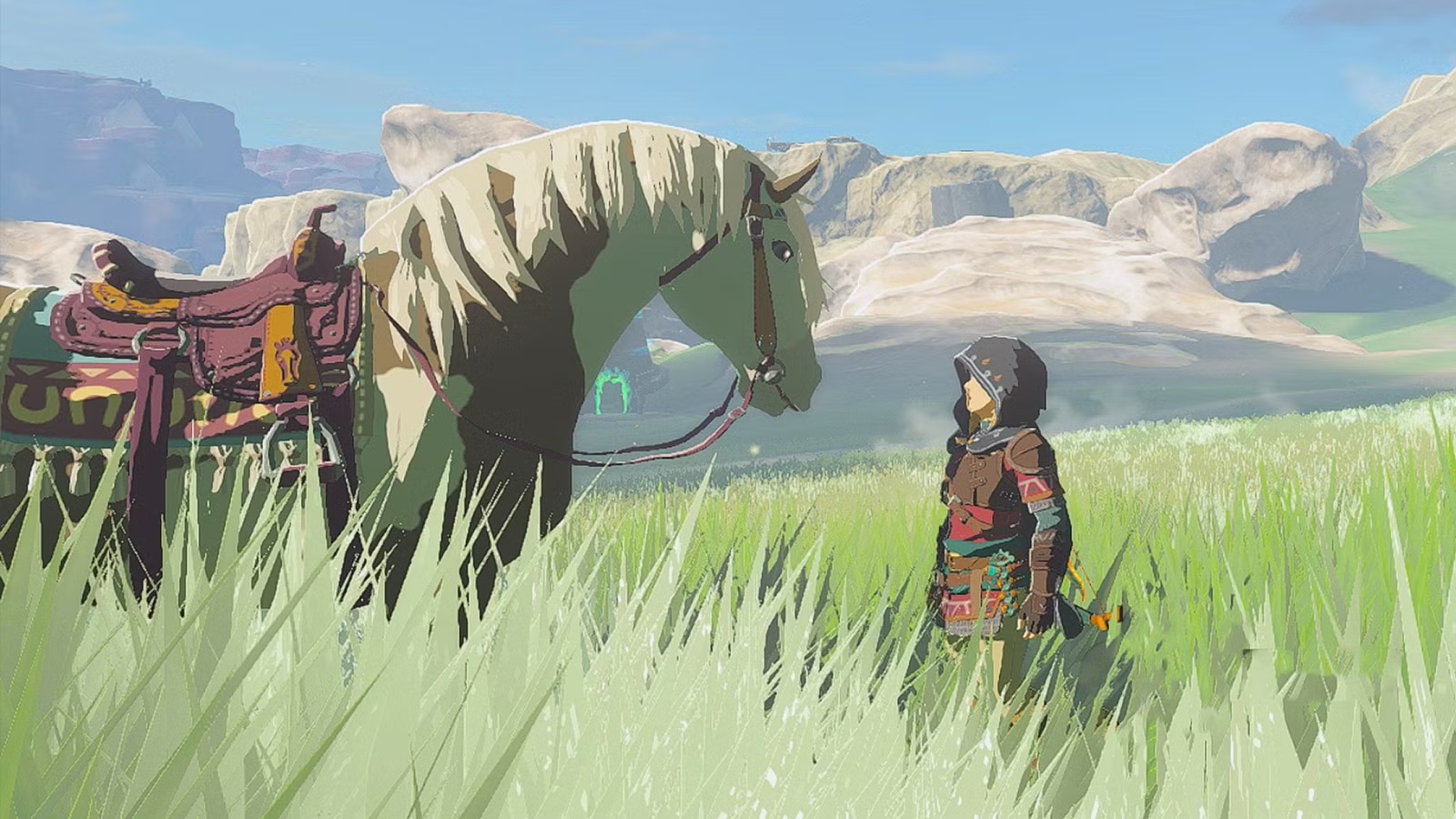
In video games like Zelda, the best parts are always the side quests.
The main quest is never the part you remember
My favorite video game of all time is The Legend of Zelda: Breath of the Wild. I played it when the Nintendo Switch first came out. I’d waste hours playing it, which is not the kind of thing a Lieutenant Colonel usually admits in print.
If you’ve ever played a big open-world game, you know there’s always a main quest. Save the princess. Defeat the evil guy. Save the kingdom.
But here’s the strange part. That’s almost never what you remember.
You remember the side quests.
You see something weird glowing on top of a mountain and you go check it out. You help a random villager find her chickens. You spend an embarrassing amount of time trying to tame one specific horse. You crawl into a cave that has absolutely nothing to do with where you’re supposed to be going.
Sometimes you look up and realize three days have passed and the main story hasn’t moved an inch.
And yet, somehow, it has.
Because along the way you picked up better gear. You learned how the world works. You got stronger. You found a shortcut you’ll need later. You became a little more capable of handling whatever the game was going to throw at you next.
But there’s something else too, and I think it’s the more important part.
The side quests are what make the game fun.
Sitting on that Zoom call, I realized that’s a pretty accurate description of my life.
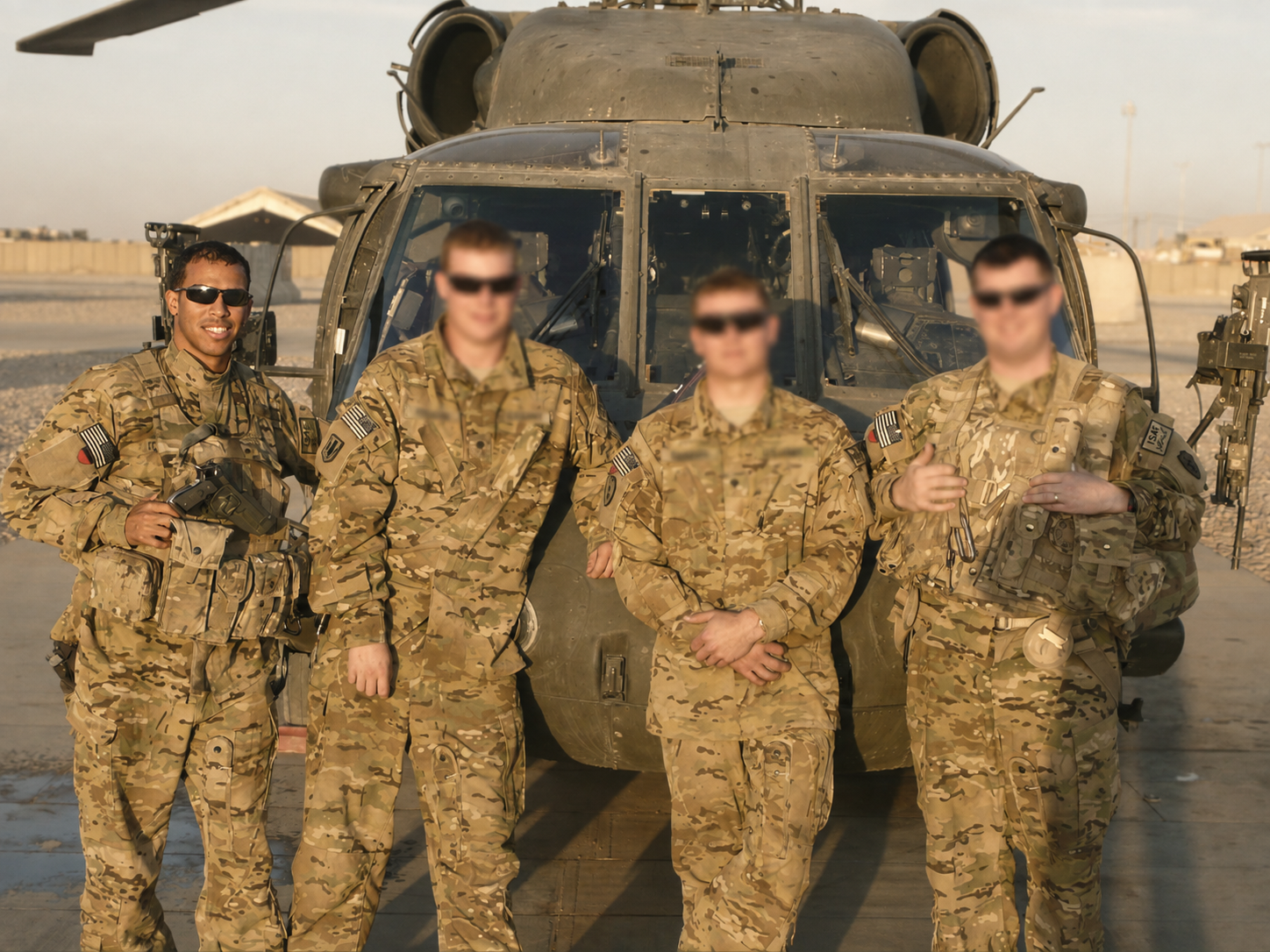
I went to combat with some of the greatest Americans I know. Most returned, some didn't.
My main quest, version one
For a long time, the Army was my main quest.
I showed up at West Point at eighteen with a buzz cut and no real idea who I was. I learned to fly helicopters. I deployed to Iraq and Afghanistan. I led hundreds of soldiers in combat, and I flew missions with some of the greatest Americans I know. Most of them came home, and I still remember the ones that didn’t.
Toward the end of my career I was responsible for a team of more than fifty engineers and experts overseeing billions of dollars in government aircraft programs. Big defense contractor. Big meetings. Big consequences.
Then that chapter ended. I defeated the final boss (the Department of Veterans Affairs, and if you know, you know) and the quest changed.
My main quest, version two
Today my main quest is my family and my ministry.
I founded Heartspace Church, an interfaith community where people come to heal, to sit in ceremony with plant medicine, and to remember who they are. I spend my days thinking about God, consciousness, community, and how we help each other find our way home.
Going from Blackhawk pilot to psychedelic chaplain is already a pretty strange character arc.
But then there are the side quests.
I helped my wife build her law firm. I became an angel investor in medical technology that saves lives. I’m helping produce a film about generational trauma (you can watch the trailer here). I work with nonprofits helping veterans heal from what war did to them. I wrote a book about marriage and published children’s books about the Taino indigenous people. I finished an Ironman. I earned a doctorate studying artificial intelligence. I was a finalist to become a NASA astronaut. I got certified as a coach. And right now I’m writing a book about Jesus that I believe might matter more than anything else I’ve made.
At one point I even started a snow cone business, which, out of everything I’ve ever done, is usually the one people remember most.
For years, a lot of these things felt disconnected. Like distractions from whatever I was “supposed” to be doing.
My wife Zaira has a look. I’ve seen it more than once. I saw it the day I came home and told her I’d bought a snow cone cart. I saw it when I told her I was writing a sensual science fiction novel. And I definitely saw it when I told her I was going to become a psychedelic facilitator. She never said a word. She just shook her head slowly, and the look said it all: Robert, what exactly are you trying to be?
I didn’t have an answer then.
I do now.

Robert Solano
My main quest will always be protecting the villagers (my children) and saving the princess (my wife).
Nothing was a distraction
Every one of those experiences gave me something.
The snow cone business taught me more about sales than any MBA class could have. The Ironman taught me how to push my body past the limiting beliefs of my mind. Coaching certification taught me to shut up and listen, which is a skill the Army does not exactly prioritize. The NASA process taught me to chase my dreams with everything I’ve got, and that sometimes, once you get close enough to touch one, you discover it was never really the dream you wanted. Investing taught me that helping a stranger reach for their dream can quietly become your dream too, especially when it has the power to change the world.
A skill. A relationship. A failure. A story. A little more courage. A different way of seeing people. A deeper understanding of myself.
They leveled me up.
And every single one has made me better at the work I do now. When I sit with a veteran in ceremony, I’m drawing on the combat pilot, the coach, the guy who sold snow cones at the little league field, the guy who ran 26 miles after swimming and biking all day, and the dad of three little ones. All of them show up.
More importantly, they made the journey a hell of a lot more interesting.
What the research says about wandering
It turns out this isn’t just a video game metaphor. There’s actual evidence that the detours matter.
In 2020, a team of researchers led by Dr. Ciara Kelly at the University of Sheffield published a study in the Journal of Vocational Behavior looking at people with serious hobbies. What they found was interesting: when your hobby is very different from your job, spending more time on it actually increased your confidence in your ability to do your job. The wandering made people better at the main quest. (The catch was that when the hobby was too similar to the work, it could have the opposite effect, so the cave you crawl into should probably be a real cave, not a work-shaped one.)
Dr. Stuart Brown, a psychiatrist who founded the National Institute for Play, spent years studying what happens to adults who stop playing. His conclusion, which I think about a lot, is that “the opposite of play is not work. It’s depression.”
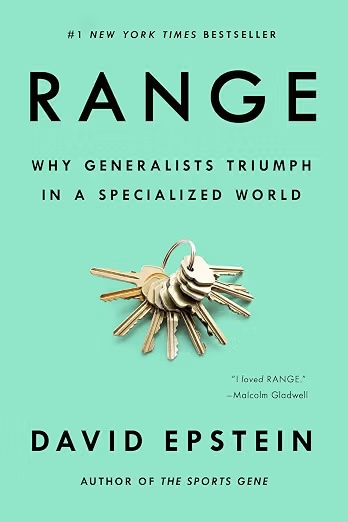
And David Epstein’s book Range makes the case, with a mountain of examples, that the people who end up doing their most meaningful work are often the ones who sampled widely, took detours, and arrived late to their real thing. The generalists, not the specialists.
Steve Jobs said the same thing in a different way in his Stanford commencement speech. You can’t connect the dots looking forward. You can only connect them looking back. The calligraphy class he wandered into after dropping out of college became the reason the Mac had beautiful fonts.
Every one of these people is describing a side quest.
“Urgent and important. . . an essential read for bosses, parents, coaches, and anyone who cares about improving performance.” —Daniel H. Pink
The trap of the main quest
I think most of us are so focused on the main quest that we forget we’re allowed to wander.
The career. The kids. The mortgage. The balance of our 401(k). The next promotion.
Those things matter. I’m not telling you to quit your job and go live in a van. I am telling you that if you’re not careful, you can spend your entire life sprinting toward the Big Boss and miss half the world along the way.
And here’s the part nobody tells you: you will eventually beat the Big Boss. You’ll get your DD-214. You’ll retire, or the company will get sold, or the kids will move out, or the thing you built your identity around will just end. The ending credits will roll, and you will meet the video game creator.
When that day comes, you’ll ask the big man in the sky, “Did I beat the game?”
He will look at you and smile, then ask, “Did you enjoy the game?”
Maybe you don’t need another goal
Maybe you need a side quest.
-
Take the class that makes absolutely no sense for your career.
-
Write the book nobody asked you to write.
-
Learn to paint.
-
Start the weird little business.
-
Volunteer somewhere.
-
Take your kids camping.
-
Make the film.
-
Plant the garden.
-
Go see what’s on top of the mountain, simply because you’ve always wondered.
It may turn out to have nothing to do with your main quest.
Or twenty years from now you may look back and realize it had everything to do with it.
Either way, don’t forget to play the game.
How to find your next side quest
If something in this stirred you, don’t just close the tab and go back to the main quest. Here’s what I’d actually do this week.
1. Spend an hour unplugged.
No phone, no podcast, no screen. Go for a walk, sit on the porch, lie in the grass. Most of us have no idea what brings us energy because we’ve never been quiet long enough to notice. Pay attention to what your mind wanders toward when nobody’s asking it to be productive. That’s usually the clue.
2. Sit with these three journal prompts.
-
When was the last time I lost track of time doing something? What was it, and what did it give me?
-
What’s the “glowing thing on top of the mountain” I keep noticing and keep ignoring? What am I afraid would happen if I went to look?
-
If I stopped worrying about whether it “made sense” for my life, what would I start this month?
Don’t edit yourself. Write badly. The answers are usually already in there.
3. Pick one side quest and give it 90 days.
Not a life change. An experiment. Sign up for the class, buy the paint, book the campsite, write the first chapter. Ninety days is long enough to learn something and short enough that you can’t talk yourself out of it.
4. Talk it through with someone who’s done it.
If you’re standing at the edge of a chapter ending, or you’ve been staring at the same mountain for years, I’d be glad to help. I’m a certified coach and I’ve walked this road more times than I care to admit. Send me a message through my contact form, or if you’ve signed up for my weekly newsletter, reply to any of my emails and let’s start a conversation. One conversation can save you a year of circling.
And if this story landed for you, subscribe below. I write about faith, healing, leadership, and the strange beautiful detours that make a life. Most weeks it’s a story like this one. Some weeks it’s a snow cone recipe. You never know.
With love and gratitude,
Robert