Chapter 11: The Illusion of Free Will
The Sunday Letter
One honest letter a week: stories, lessons, and one question to carry with you.
My experiences with the Universal Mind began to quietly unravel something I had always taken for granted: the idea that I had free will.
Ever since Catholic elementary school, I believed that I had free will—the ability to choose good versus evil, and to shape my own destiny. I also believed that randomness was proof of it.
Randomness exists in everyday life, and I used to think that if you traced reality all the way back to the beginning of the universe, randomness is what led to the non-homogenous universe we live in today. Without randomness, I imagined the universe would be something like a perfect lattice: space filled with evenly spaced matter and energy. My theory was that randomness led to atoms combining, stars forming, planets and solar systems emerging, evolution unfolding, and eventually human life. Randomness, I argued, was proof of free will—free will woven into every level of the universe.
In that mystical state, however, I entered a place of deep oneness where the boundary between “me” and everything else disappeared. Time collapsed. I didn’t feel like I was moving forward through life moment by moment. Instead, I realized that my entire life—from birth to death—already existed all at once, like a completed story I was simply witnessing.
And it wasn’t just my life.
I had lived my wife Zaira’s life. My children’s lives. Every human life that has ever existed, and every life that will ever exist. Not once, but endlessly. As if my soul had walked every path, over and over, an infinite number of times.
That experience challenged my beliefs. Because if the same lives keep unfolding the same way each time… what does that say about free will?
If every choice, every heartbreak, every success, every relationship is already written into the structure of reality, then are we actually choosing anything at all? Or are we simply playing out a script that was set in motion long before we arrived?
And if free will is an illusion, then what happens to everything we build our ethics and spirituality on? What does “good” or “evil” even mean? Do we go to heaven or hell depending on the choices we make, or is there even a heaven and hell at all?
As I started exploring these questions for myself, I realized something humbling: people have been wrestling with free will for thousands of years. Long before brain scans and psychology studies, human beings were already sensing that something about “choice” might not be as simple as it seems.
Early philosophical works questioning free will go all the way back to ancient Greece. In the 5th century BC, the philosopher Leucippus proposed that everything happens for a reason and by necessity. Nothing simply appears out of nowhere. Every event has a cause. His student, Democritus, expanded on this idea and imagined a universe made of atoms moving according to natural laws. In that picture of reality, everything unfolds like falling dominoes. Once the first tile tips, the rest follow. There isn’t really room for freedom in the way we normally think about it—only cause and effect.
Centuries later, St. Augustine wrestled with this question from a spiritual perspective: if God already knows everything that will happen, how could we truly be free to choose otherwise? That debate carried on from the medieval period through the Enlightenment, with thinkers like Spinoza arguing that the universe is completely deterministic and that free will is more illusion than reality.
When I first read these ideas, they sounded similar to what I had experienced at the music festival. It was comforting and unsettling at the same time.
Then modern science began echoing those same questions.
In the 1980s, neuroscientist Benjamin Libet ran a set of experiments that quietly shook the foundations of how we think about decision-making. He asked participants to perform a simple task—press a button whenever they felt like it—while monitoring their brain activity. What he found surprised everyone. The brain showed signs of initiating the decision before the person was consciously aware of choosing. In other words, the brain seemed to decide first, and the conscious mind became aware second.
Later studies pushed this even further. In some cases, researchers could predict what choice someone would make up to ten seconds before the person consciously reported making that decision. Ten seconds may not sound like much, but neurologically it’s an eternity. It suggests that what we experience as “I chose this” might actually be our conscious mind catching up to something that has already been decided by our subconscious beneath the surface.
The universe may seem random because it is so complex. On the grand scale, say of human society, there are so many different factors that it can be nearly impossible to predict certain events or outcomes. For example, predicting the outcome of an election, the fluctuations of the stock market, or the next global pandemic are all incredibly challenging due to the vast number of variables involved.
Even within a controlled laboratory environment, we sometimes observe apparent randomness at the smallest level. Consider an experiment where we excite an atom of hydrogen to the point where the electron gets released and breaks free from its orbit. It may appear random which direction it goes flying after it breaks free. But is this truly random, or is it because our instrumentation and tools are not capable of accurately measuring or predicting the incredibly fast-moving electron?
Science continues to show us that nothing in the universe is truly random. Everything can be predicted given the right tools and information. What looks like chaos is often hidden order.
And maybe our decisions are no different.
Your brain functions like an incredibly complex circuit. It receives inputs—memories, sensations, emotions, past experiences—processes them through neural pathways shaped by your genetics and environment, and then produces an output: a thought, a feeling, an action. If someone could perfectly map every neuron and every connection, they might be able to predict what you’ll do next, the same way a physicist can predict the path of a falling object.
Even neuroplasticity, the brain’s ability to change, doesn’t happen randomly. Those changes are guided by experiences you didn’t choose to have and conditions you didn’t choose to be born into.
When you step back and look at it this way, free will starts to look less like a unique ability of human intelligence and more like a story the brain tells itself. A useful story, but still a story.
That story helps us move through life without getting overwhelmed. Instead of tracking the infinite chain of causes behind every moment, we simply feel, “I had a choice and decided this or that.”
Free will, then, is an illusion—a very important one. This illusion of free will allows us to process vast amounts of data quickly and efficiently. It’s a shortcut our brains use to navigate the complexities of life.
There’s a simple example I love. Researchers throw a ball unexpectedly at someone and measure their brain activity. What they found is fascinating: the participants react to the ball, either moving or catching it, before the part of the brain associated with conscious thought or reason responds. When asked why they reacted the way they did, the participants will explain a rational thought like, “I caught the ball so that it would not hit me.”
This thought is produced in the rational part of the brain. However, this rational explanation comes after the action. The mind creates a narrative to make sense of something that already happened.
We do this all day long. Action first, story second.
At first, this idea cracked the foundation of all my spiritual beliefs. But over time, it started doing something unexpected. It made me a more empathetic person.
If free will is an illusion, then people aren’t simply choosing to be selfish, hurtful, or evil. They are the result of everything that has ever happened to them.
Your boss didn’t choose to fire you because he is a jerk. He fired you because everything that has ever happened to him in his life has shaped him into the person he is. He didn’t have a choice but to fire you.
Your spouse didn’t choose to marry you. Your marriage was already predetermined. Everything that has ever happened in the universe, everything that has ever happened to the two of you as individuals, led to the inevitable outcome of you two getting married. Your marriage was predetermined since the beginning of time.
Let’s take an extreme example. Let’s say there is a person who committed atrocious crimes—a serial killer. You may look at that person and ask, “How could he have done such an evil thing?” You may think that you would never have done such an evil act.
But the truth is that if you were in that person’s shoes—if you had their same DNA, their same life experiences, their same upbringing, their same mental health issues—then you would have chosen the exact same thing. You would be a serial killer too, which should make you very grateful that you were not born in their shoes.
This understanding does not relieve us from our duty to protect society by removing dangerous individuals from it, punishing them, or attempting to reform them. Just as if you had a cancerous mole on your arm, you would remove it to protect your body, so too must the collective consciousness of society protect itself, which is why we have evolved to have laws and law enforcement.
A deterministic understanding of the universe does not remove the need for laws and consequences, but it does open the door to understanding. It replaces hatred with empathy—though not necessarily compassion, pity, or permissiveness.
It can even change how you relate to the people you love, like your parents.
Most of us carry at least a little resentment against our parents, even if we love them deeply. Despite their best intentions, all parents make mistakes, and most of us inherit some form of trauma or limitation because of it.
For me, I’ve wrestled with questions like: why didn’t my parents do more to prepare me for the challenges of being a brown-skinned person in America? Why didn’t they encourage me to learn Spanish, the language of my ancestors? Why didn’t they teach me more about finances so I could have been more financially secure earlier in life?
Maybe your pain with your parents is different, maybe it’s heavier, but almost everyone has some place where they wish their parents had done better—even when, like mine, your parents are basically saints. Seeing them through this lens doesn’t erase the impact of what happened, but it can soften the blame. It helps you recognize that they were doing the best they could with the brain, resources, and emotional tools they had. And that understanding can be the beginning of forgiveness, not as a favor to them, but as a gift to yourself.
And it changes how you treat yourself, too.
You stop replaying every mistake as if you should have magically known better. You begin to see that, in each moment, you acted with the brain and awareness you had at the time. You were doing the best you could with the wiring you had. That realization can lift a surprising amount of guilt and shame.
I’ve felt this most sharply when I look back on my divorce. For a long time, I replayed the timeline like a courtroom drama in my head—searching for the moment I failed, the moment I should have said something different, the moment I should have been more mature, more patient, more present. I would ask myself where I screwed up, how I let the marriage fall apart, and what it meant about me that it didn’t work.
This way of seeing free will didn’t magically make the grief disappear, but it did loosen the self-punishment. It helped me hold two truths at once: I still have responsibility, and I can still learn—but I don’t have to hate myself for my failures or mistakes. I can see my younger self as a human being acting from pain, conditioning, blind spots, and unmet needs. And from that place, compassion becomes possible, which is what finally creates space for real change.
At the same time, none of this means you become passive or give up on life. You still make plans. You still work hard. You still show up for your family and your purpose. The experience of choosing still happens. It’s just part of the process rather than proof that you stand outside the universe, independently authoring every outcome.
This perspective can be incredibly liberating. It frees us from the burden of excessive worry about the future. Instead of anxiously trying to control every aspect of our lives, we can approach our journey with a sense of curiosity and openness. We can put forth our best efforts, knowing that these efforts themselves are part of the predetermined path.
There’s a strange peace that comes with that. You do your part, but you stop gripping so tightly. Instead of trying to force outcomes, you move through life a little more gently, a little more trustingly.
If success is part of your path, it will unfold. If a lesson is needed, that will unfold too. Your effort still matters, but it’s woven into something larger.
For me, this perspective has been surprisingly freeing.
This realization eases the constant anxiety about whether you are making the “right” decision and forever living with the consequences of your mistakes. Instead, you can focus on being present, doing your best, loving the people in front of you, and letting the rest play out as it will.
And when setbacks come, they don’t feel like personal failures anymore. They feel like chapters. Necessary steps. Part of a much bigger story that our small minds can’t fully see.
There’s something deeply spiritual about that.
Life isn’t a test you might fail. Instead, it’s a path you’re meant to walk.
If this story stirred something in you, I’d love to keep the conversation going. Every Sunday I send one honest letter about healing, sacred medicine, the spiritual path, and what life is teaching me along the way — plus one question to carry into your week.
Robert Solano
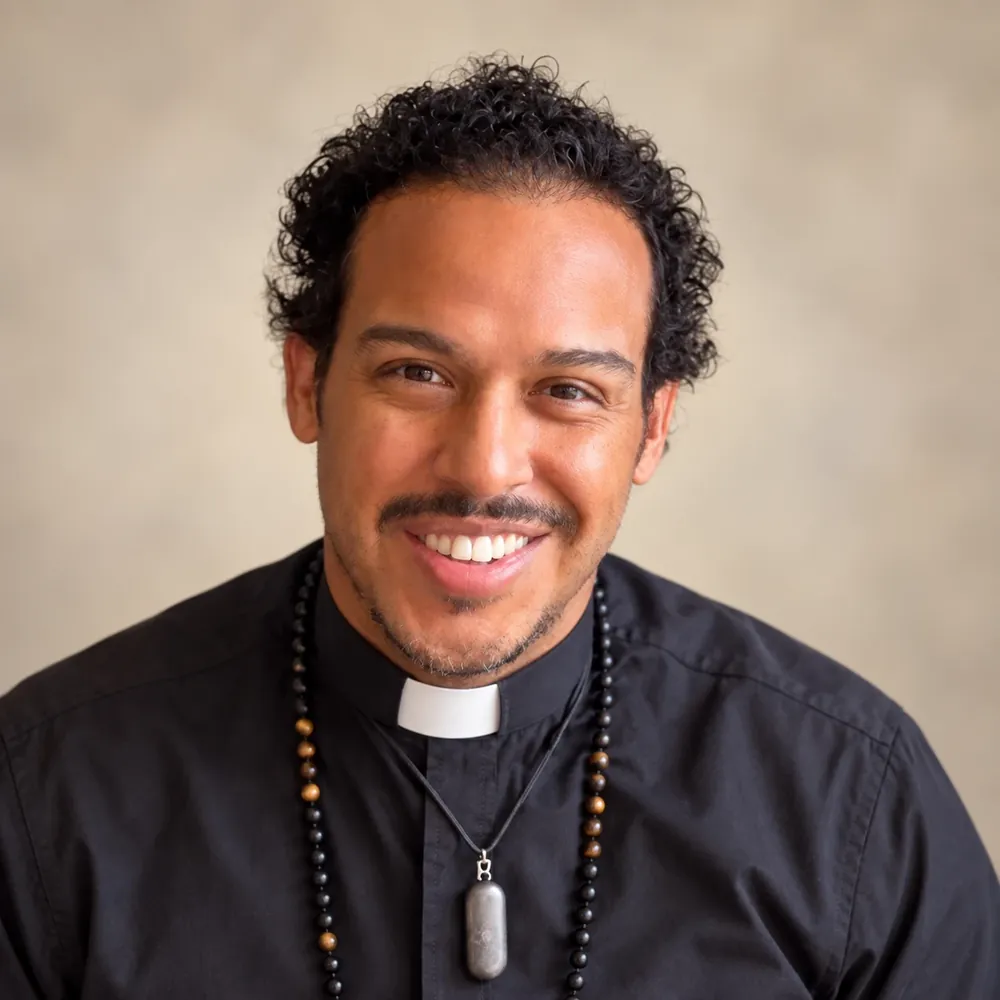
I’m a psychedelic chaplain, a retired U.S. Army Lieutenant Colonel and Black Hawk pilot, and the founder of Heartspace Church. I write about healing, sacred medicine, leadership, and the spiritual path. I live with my wife, Zaira, and our three children.
Suggested Reading
Related Posts
KEEP READING
More Reflections
Artists vs. Artificial Intelligence: The Debate over AI-Generated Art and Copyright Laws
The image to the left was created by artificial intelligence. It was trained using the image on the right, which is an original...
READ MORE →
The Garden of the Mind
Instead of paths in the snow, we should think of psychedelic neuroplasticity as an act of gardening. "The mind is everything. What you...
READ MORE →

An Open Letter to a Former Associate
Dear Former Associate, A few weeks ago, you gave us notice that you were leaving our law firm. You agreed to stay on a...
READ MORE →

Why Your Side Quests Matter: What 21 Years in the Army and a Video Game Taught Me About Purpose
In Zelda, the side quests are what you remember. Twenty-one years in the Army, a psychedelic church, and a snow cone cart taught me the same is true of life.
Trusting Your Intuition: The Silent Power of Our Subconscious Mind
Analysis has limits. How I learned to trust my gut in hiring, leadership, and life, why intuition works, and how to balance it with careful decision-making.
STAY CONNECTED
The Sunday Letter
Enjoyed this? Once a week I send one honest letter — a story from my life, what I’m learning about God, healing, leadership, and love, and one question to carry into your week.
Free. Unsubscribe anytime.