
Chapter 12: The Illusion of Time
The Sunday Letter
One honest letter a week: stories, lessons, and one question to carry with you.
My experience with the Universal Mind shattered any beliefs I had about time.
In that mystical state, time didn’t flow. It didn’t move forward or backward. It simply was—all at once. My entire life, and the life of everyone and everything, existed simultaneously, from birth to death, like a completed painting I could see in its entirety. I wasn’t moving through time. I was experiencing all of it at the same moment.
When I came down from that experience and started trying to make sense of it, I stumbled onto something called “block time theory,” also known as eternalism. And suddenly, what I had felt in that altered state had a name in physics.
Block time suggests that the past, present, and future all exist simultaneously. Imagine the universe not as a movie reel playing frame by frame, but as a completed film strip where every frame already exists. You might be experiencing “now,” but yesterday and tomorrow are just as real—they’re simply located at different points in the block.
Einstein’s theory of relativity actually supports this idea. He showed that time isn’t absolute. It’s relative, meaning it can stretch and compress depending on gravity and velocity. Two people moving at different speeds or in different gravitational fields will experience time differently. If time were truly flowing uniformly for everyone, that wouldn’t be possible.
Einstein himself once wrote to comfort the family of a deceased friend: “People like us, who believe in physics, know that the distinction between past, present, and future is only a stubbornly persistent illusion.”
An illusion.
That word again.
But block time isn’t the only theory challenging our everyday experience of time. There’s also the “growing block” theory, which suggests that the past and present are real, but the future doesn’t exist yet—it’s still being created. Then there’s presentism, which argues that only the present moment is real, and both past and future are merely abstractions.
Physicist Carlo Rovelli takes it even further. In his book The Order of Time, he argues that time doesn’t exist as a fundamental feature of the universe at all. Instead, it emerges from our limited perspective as humans. At the quantum level, there is no universal “now.” Events don’t happen “in time”—they simply happen in relation to other events.
What all these theories share is a willingness to question what seems most obvious: that time flows steadily from past to future, that it’s the same for everyone, and that it’s woven into the fabric of reality itself.
My mystical experience taught me something else about time: it’s infinite.
We’re taught that the universe began with the Big Bang roughly 13.8 billion years ago. Before that? Nothing. No space, no time, no matter. Just… nothing. And one day, the universe will end—either collapsing back in on itself, or expanding forever into cold, dark emptiness.
But that story requires a beginning and an end, which means it requires time and space to behave in very specific ways. It asks us to hold one of those variables constant while the other changes. But modern physics tells us that’s not how it works. Space and time are inseparable—they’re part of a single fabric called spacetime. And when you start playing with the math, the idea of a definitive “beginning” or “end” starts to get fuzzy.
Consider black holes for a moment—one of my favorite topics. Imagine you’re in a spaceship orbiting a black hole, gradually descending into lower and lower orbits, approaching the event horizon. From your perspective inside the ship, assuming it could somehow withstand the gravitational forces, time would pass normally. One second would feel like one second. You’d cross the event horizon and continue falling inward.
But to an outside observer watching you fall, something very different would happen.
They would see your ship slow down as you approached the event horizon. The light from your ship would stretch and redden. You would appear to move slower and slower, your image becoming distorted, stretched thin like taffy. Eventually, from their perspective, you would seem to freeze in place, your ship suspended at the edge of the black hole for eternity. They might wait a thousand years, a million years, and you would still appear frozen there.
But you? You’d experience none of that. You’d just keep orbiting the black hole.
Two realities. Two experiences of time. Both true.
Now here’s the wild part: our entire solar system, maybe even our galaxy or the whole observable universe, could be inside a black hole right now. And we’d never know it. Time would feel normal to us. We’d go about our lives, unaware that to some observer outside, we appear frozen, stretched across an event horizon that swallowed us long ago.
Here’s where it gets strange.
As you go back toward the Big Bang, gravity becomes stronger and stronger. Spacetime itself compresses. And just like near a black hole, time behaves differently the closer you get. What looks like a finite amount of time to an outside observer might stretch infinitely from another perspective.
In other words, if you could somehow travel backward through time toward the Big Bang, you might never actually reach a “beginning.” Time would stretch endlessly, asymptotically approaching zero but never quite getting there. The universe wouldn’t have started 13.8 billion years ago—it would have always existed, infinitely unfolding backward.
I know that’s hard to wrap your mind around. Our brains aren’t built to handle infinity. We need beginnings and endings to make sense of stories. But the universe doesn’t owe us a story we can understand.
And maybe consciousness works the same way.
Let’s take a simple example that most people can relate to. In the Army, I had to run a two-mile fitness test regularly. Twelve to fourteen minutes of hard running. And let me tell you, those minutes felt like an eternity. Every breath was labored. Every second stretched. My legs screamed. My lungs burned. Time moved slowly.
But fourteen minutes watching a favorite movie? Gone in a blink.
Same amount of clock time. Completely different experience.
Psychedelic medicines take this to an extreme.
During my first ceremonial mushroom journey, I remember looking at a teacup on the table in front of me. Then I glanced out the window at the greenery beyond. Then back to the teacup. Then to the window again. And again. And again.
I felt stuck in a loop, looking between the two hundreds of times, unable to break free. Each glance felt like an eternity, repeating over and over in my mind. I was convinced I’d been trapped in that loop for hours.
But in reality? It was probably only a few seconds. Maybe I looked back and forth three or four times.
At the music festival, during that mystical experience, minutes felt like years. Events seemed to repeat endlessly, cycling through the same moments over and over. I lived entire lifetimes in what was probably only an hour or two of clock time.
These experiences didn’t just show me that time perception is flexible. They showed me that time itself might be more of a construct—something our brains create to help us navigate reality—than an objective feature of the universe.
A table doesn’t experience time. A rock doesn’t feel seconds ticking by. Inanimate objects simply exist. Time, in that sense, only exists for consciousness.
Do you remember how time passed when you were an infant? Probably not. But I’d argue that time felt different when your consciousness was just forming. Maybe slower. Maybe without the clear divisions between past, present, and future that you experience now.
Even as adults, time seems to move faster or slower during different phases of life. Childhood summers felt endless. Now, years fly by in what feels like months.
So here’s an interesting thought: What if the moments before you die are like entering a black hole?
To an outside observer—the doctors, your family standing around your bed—it might appear that you slip away quickly. A few breaths. A few heartbeats. And then you’re gone.
But what if, from your perspective, that final moment stretches infinitely? What if, as your consciousness releases its grip on the body, time dilates the same way it does near an event horizon? What if that last second becomes an eternity, and in that eternity, you dissolve back into oneness with everything?
They say that before you die, your life flashes before your eyes. Have you ever wondered what that would actually feel like? How it would be different from a memory?
What if “life flashing before your eyes” doesn’t mean watching a highlight reel, but actually reliving your entire life—every moment, every breath, every choice—in vivid, full detail? What if the moment before death is really just a reset button, sending you back to the beginning to live your life all over again?
What if you’re in that moment right now?
What if you’re actually on your deathbed, and what you think is your life in this very moment is actually you experiencing life flashing before your eyes?
How might you live differently if you knew this experience was God’s gift to you—one last chance to walk through your days before you return to oneness?
What if death isn’t an ending at all, but an infinite return?
I don’t know if any of that is true. I can’t prove it. But my experience taught me that time is far stranger, far more flexible, and far less reliable than I ever imagined.
There are many ways to think about time. But the key is this: however you think about it, research and psychedelic experiences show us that time is not the constant, steady flow we take for granted day to day.
It’s an illusion. A useful one. Maybe even a beautiful one.
But an illusion nonetheless.
And once you see that, you start to realize that the universe—and your place in it—might be far more mysterious, far more infinite, and far more interconnected than the ticking clock on your wall would ever suggest.
If this story stirred something in you, I’d love to keep the conversation going. Every Sunday I send one honest letter about healing, sacred medicine, the spiritual path, and what life is teaching me along the way — plus one question to carry into your week.
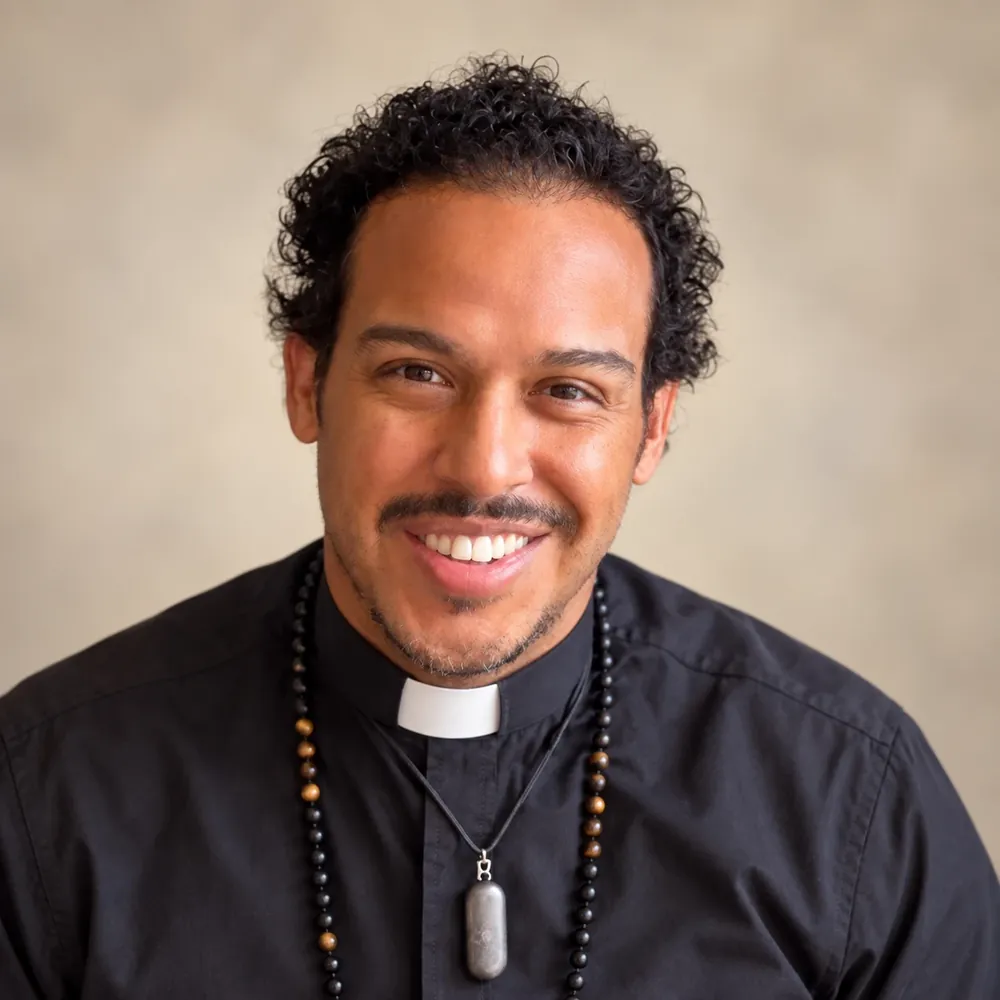
Robert Solano
I’m a psychedelic chaplain, a retired U.S. Army Lieutenant Colonel and Black Hawk pilot, and the founder of Heartspace Church. I write about healing, sacred medicine, leadership, and the spiritual path. I live with my wife, Zaira, and our three children.
Suggested Reading
Related Posts
KEEP READING
More Reflections
What Is Universal Intelligence? Why We Are All One Spirit
What is universal intelligence? My belief that we are all one spirit living different human experiences, and how that oneness changes the way we love and live.

The Garden of the Mind
Instead of paths in the snow, we should think of psychedelic neuroplasticity as an act of gardening. "The mind is everything. What you...
READ MORE →

How I Built This: Building a Snow Cone Business in 30 Days
How I started a shave ice business on a golf cart in 30 days for about $10,000: my raw journal, every expense, the licenses I needed, and how it ended.

Weekly Update: Saying Goodbye to Lieutenant Colonel Solano (June 8th 2025)
Next week is my retirement ceremony. I’ve been planning a three-day celebration that includes two parties, a final flight with a 75-foot water canon, a...
READ MORE →
In memory of Hope Grace Rockland, The Baby Found in a Deli Garbage Can
Photo by Mike B., at pexels.com If the idea of having children while managing two careers seems overwhelming, imagine how my parents...
READ MORE →
STAY CONNECTED
The Sunday Letter
Enjoyed this? Once a week I send one honest letter — a story from my life, what I’m learning about God, healing, leadership, and love, and one question to carry into your week.
Free. Unsubscribe anytime.